
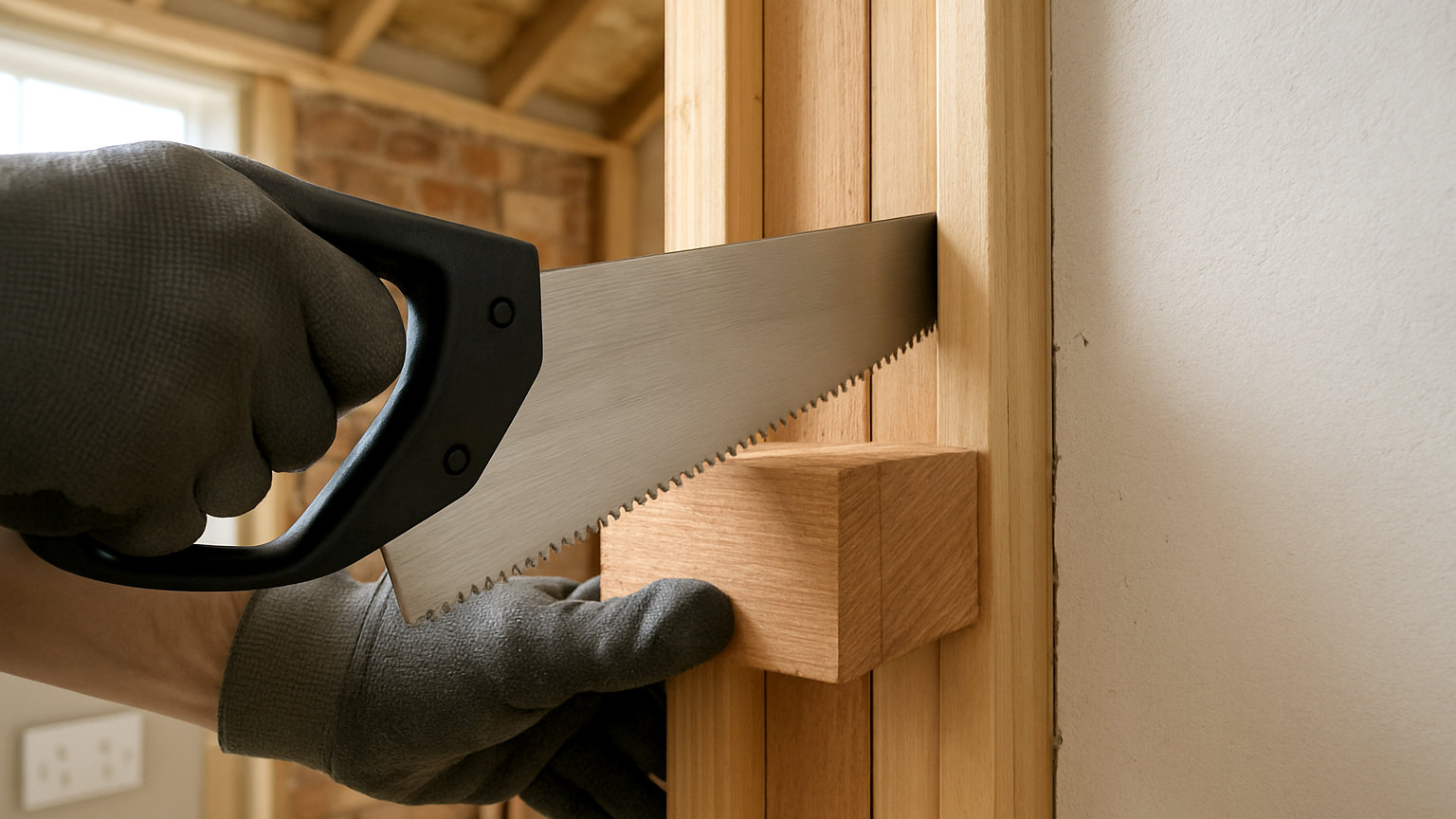
A strong lock in a weak frame achieves very little. Door security is a chain, and it is worth spending on the weakest link rather than the most visible one.
Step 1: assess the whole door
- Look at the frame: is the timber sound, and is it fixed properly to the structure?
- Look at the keep: is it screwed into the lining only, or into the structure behind?
- Look at the hinges: are they on the outside, and are the screws long?
- Look at the glazing: is there glass within reach of the lock or a thumbturn?
- Look at the letterbox: can a hand or a tool reach the lock through it?
- Look at the cylinder: does it protrude beyond the handle?
- Look at the door itself: hollow or solid, and are the panels sound?
Reinforce the frame
Most forced entries through a door break the frame, not the lock.
- Fit long screws through the keep, 75mm or more, into the structural timber or masonry behind the lining
- Fit a London bar, a steel strip along the frame at the lock side, spreading the load over a much greater area
- Fit a Birmingham bar on the hinge side for the same reason
- Repair any rot or split timber in the frame first
- Check the frame is packed and fixed properly to the wall
These are inexpensive and among the most effective upgrades available.
Hinge bolts
Simple fixed pins that engage the frame when the door closes, resisting the door being levered off its hinge side.
- Fit two per door, positioned between the hinges
- Drill a hole in the door edge and tap the bolt in
- Close the door and mark where the bolt strikes the frame
- Drill and fit the receiving plate
- Check the door still closes cleanly
Worth fitting to any outward-opening door, and to any door where the hinges are accessible from outside.
The cylinder
- TS 007 3-star, or a 1-star cylinder with 2-star handles, or Sold Secure Diamond
- Sized so it sits flush, protruding no more than about 3mm
- A protruding cylinder can be gripped and snapped
- Replacement takes five minutes and one screw
Letterboxes
Used to reach through for keys, or to reach a thumbturn.
- Fit a letterbox guard or cage on the inside
- A restrictor limits how far an arm or a tool can reach
- Never leave keys in the lock, on a hook near the door, or anywhere visible through the letterbox
- A letterbox draught brush also obscures the view inside
- Consider relocating the letterbox to a low position, or fitting an external post box
Glazing
- Glass beside or within a door lets someone reach a thumbturn or a key left in the lock
- Where there is glazing within reach, do not fit a thumbturn cylinder
- Laminated glass resists being broken through
- Check that the beading is on the inside, so the glass cannot be removed from outside
Viewers and chains
- A door viewer lets you see who is there before opening. Fit one at a height suitable for everyone in the household, and consider two heights
- A door chain or restrictor lets you open the door a little. Fit it with long screws into solid timber, since a chain fixed into a thin lining is decorative rather than useful
- Use the chain before opening to anyone unexpected
- Ask for identification and verify it independently by phoning the organisation on a number you look up, not one they give you
Back doors, side gates and outbuildings
Frequently the weakest point and the least overlooked by an intruder.
- A back door deserves the same lock standard as the front
- Fit rack bolts at the top and bottom of a timber back door
- Lock and bolt side gates, and consider a gate that is hard to climb
- Secure sheds and garages: a closed shackle padlock, a strong hasp fixed with coach bolts, and hinge bolts or coach bolts on the hinges
- Keep ladders and tools locked away, since they assist entry elsewhere
Lighting and visibility
- Fit a movement-activated light at front and back
- Keep the approach to the door visible from the street
- Cut back planting that provides cover near doors and windows
- Gravel on a path gives an audible warning
Habits that matter more than hardware
- Lock up, including when you are at home and in the garden. Many entries are through an unlocked door
- Deadlock when leaving the property, since many policies require it
- Do not leave keys visible from a window or a letterbox
- Do not hide a spare key outside; leave one with a neighbour
- Use timer switches to give an occupied appearance
- Do not advertise absence on social media
- Where a key is lost, change the cylinder rather than hoping
Balance with escape
Security must not compromise escape in a fire.
- Everyone in the household must be able to get out quickly, at night, in the dark
- Keep keys in a fixed known place near the door, out of sight of the letterbox
- Never fit a lock that cannot be opened from inside without a key you cannot reach
- Agree an escape plan
If it goes wrong
Frame splits despite a good lock: fit a London bar and long screws into the structure.
Keys stolen or lost: change the cylinder or the lock immediately.
Insurance requirement unclear: read the policy wording and fit to it.
Thumbturn within reach of glass: change to a key cylinder and keep a key nearby.
After a break-in: report it, get a crime reference for the insurer, and replace all compromised locks.
A summary
- The frame and the keep are usually weaker than the lock
- Long screws into the structure and a London bar are cheap and effective
- Fit hinge bolts where the hinges are accessible
- Upgrade the cylinder and size it to sit flush
- Guard the letterbox and keep keys out of reach and out of sight
- Never let security compromise escape in a fire


