
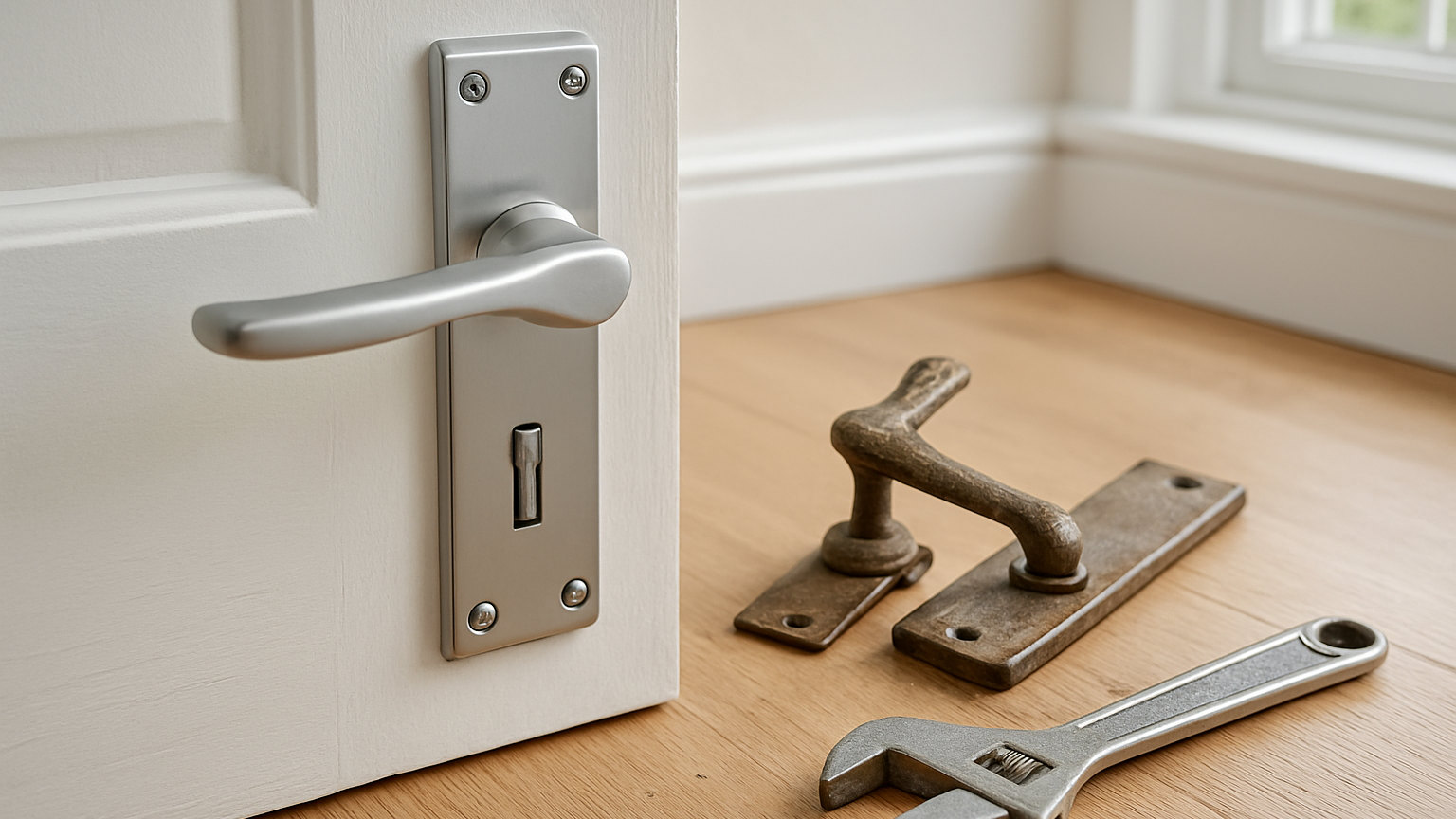
Changing handles is one of the cheapest ways to improve a house. The only difficulty is making sure the new set matches the existing latch and mortice.
Step 1: measure before buying
Take these four measurements from the existing door.
Backset. The distance from the edge of the door to the centre of the spindle hole. UK standards are commonly 57mm for a 64mm latch and 44mm for a 76mm latch. Measure it rather than assuming.
Latch case length. The full length of the latch body, commonly 64mm or 76mm, sometimes quoted as 2.5 inch or 3 inch.
Spindle size. The square bar through the latch. 8mm is standard in the UK; some continental products use 7mm or 9mm.
Lever centres. On a lock or a bathroom set, the distance between the centre of the spindle and the centre of the keyhole or turn. Commonly 57mm for a bathroom set.
Also note the faceplate: square or radius corners, and its size.
Step 2: choose the type
Latch types:
- Mortice latch: a rectangular body set into a mortice in the door edge. The standard UK internal door latch
- Tubular latch: a cylindrical body in a drilled hole. Easier to fit into a new door
- Bathroom lock: a latch plus a deadbolt operated by a thumbturn, with an emergency release outside
- Mortice sashlock: a latch plus a key-operated deadbolt, for a door needing locking
- Roller catch or ball catch: no latch bolt, for a door with no handle action, such as a wardrobe
Handle types:
- Lever on rose: a separate small round or square plate under each lever. Neat and modern
- Lever on backplate: a full plate, which covers old screw holes and marks
- Knob set: traditional. Requires a longer backset, since your knuckles must clear the frame
Choose lever on backplate where the old handles have left marks or holes, since it covers them.
What you need
- The new handle set and, if replacing it, the latch
- Screwdrivers, and small Allen keys for grub screws
- A sharp chisel and mallet
- A drill and bits, including a flat or spade bit for the spindle hole
- A bradawl, tape measure and marking knife
- A hacksaw for cutting the spindle
- Wedges
Step 3: remove the old set
- Find the fixings: visible screws in the rose or backplate, or a grub screw in the side of the lever, taking a small Allen key
- On a concealed-fix rose, prise the cover off carefully to reveal the screws
- Undo the screws and remove both levers and the spindle
- Where you are replacing the latch, unscrew the faceplate on the door edge and withdraw the latch
- Keep the old parts until the new ones are fitted and working
Step 4: fit a new latch
If the new latch matches the old, it drops straight in.
- Slide the latch into the mortice, with the sloping face of the bolt towards the closing direction
- Check the faceplate sits flush; adjust the recess with a chisel if the shape differs
- Drill pilot holes and screw the faceplate
- Where the spindle hole position differs, mark the new centre carefully from both faces and drill from both sides to meet in the middle, which prevents breakout
Drilling right through from one side splinters the far face.
Step 5: fit the handles
- Push the spindle through the latch follower
- Cut the spindle to length with a hacksaw if it is too long: it should reach the bottom of each lever's socket without bottoming out
- Fit one lever onto the spindle
- Fit the second lever from the other side
- Align both levers so they sit horizontal and level
- Fit the roses or backplates and drill pilot holes for the screws
- Tighten evenly, and tighten grub screws where fitted
- Check the levers return fully to horizontal when released
Step 6: check the operation
- The lever should operate the latch smoothly and return under spring
- The latch bolt should withdraw fully and spring back
- The door should latch cleanly into the striking plate
- The levers should not bind against the door face
- Check both sides operate independently
Bathroom sets
- A thumbturn inside and an emergency release outside, usually a slot for a coin or a screwdriver
- Check the emergency release works before you need it
- The turn and the lever must both align with the mortice positions
- Lever centres of 57mm are the common UK standard
Fire doors
Ironmongery on a fire door must be suitable for the purpose, and fitting unsuitable hardware or cutting oversized mortices can compromise the door's performance.
Check what is required before changing hardware on a fire door.
If it goes wrong
Lever droops and will not return: the latch spring is weak, or the spindle is binding. A sprung rose helps; a new latch is better.
Levers stiff: the roses are overtightened, or the spindle is bottoming out. Loosen and shorten the spindle.
Spindle too short: buy a longer one, sized to the door thickness.
Old screw holes showing: fill and paint, or fit a backplate handle that covers them.
New latch does not fit the mortice: the case length or backset differs. Measure and match.
A summary
- Measure backset, case length, spindle size and lever centres before buying
- 8mm spindle and 57mm backset are the common UK standards
- Choose lever on backplate where old handles have left marks
- Drill any new spindle hole from both faces to meet in the middle
- Cut the spindle so it does not bottom out in the levers
- Check the emergency release on a bathroom set before you need it


