
UK doors use a small number of lock types, and which one you have determines everything about repairing, replacing or upgrading it.
Mortice locks
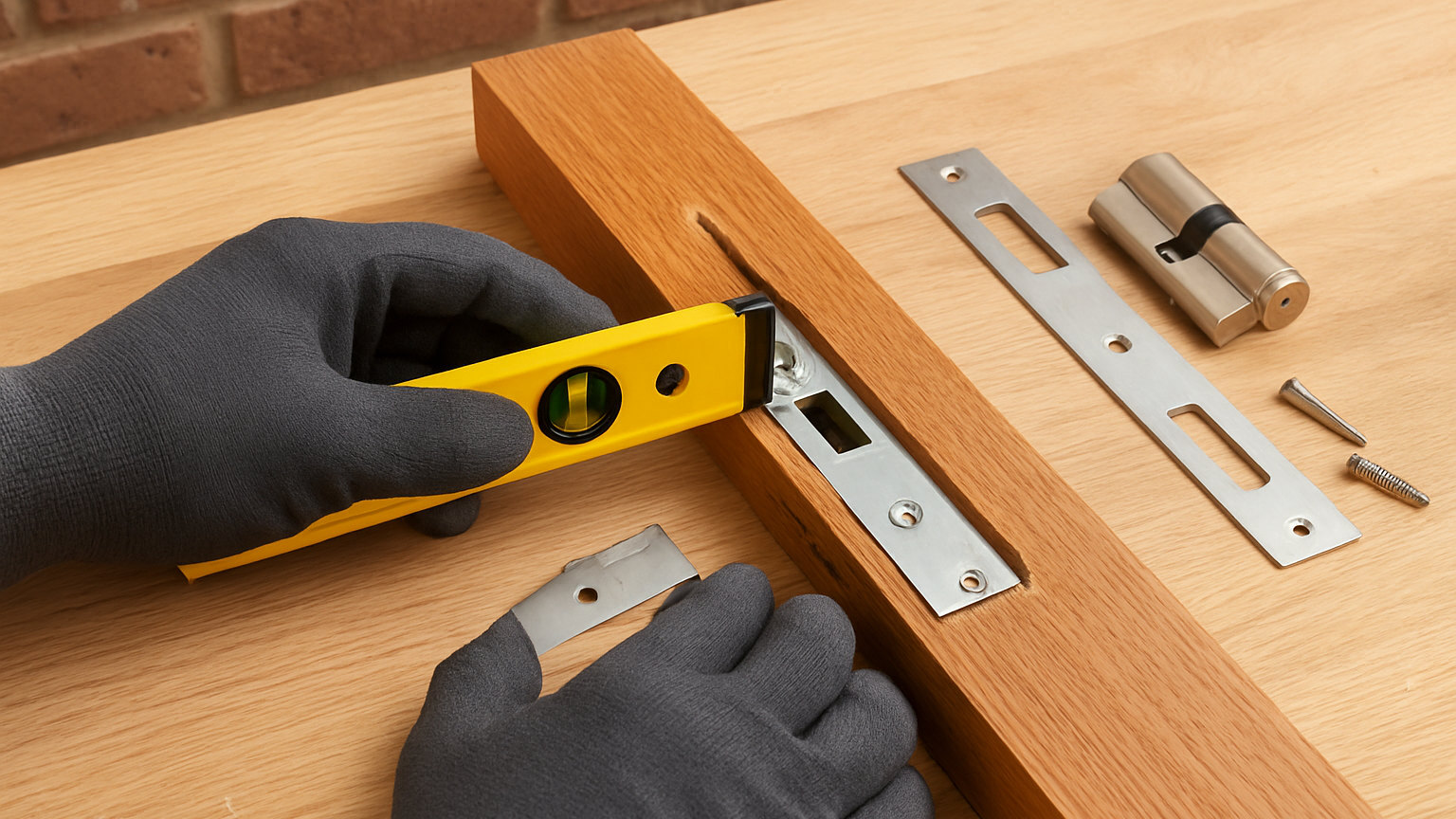
Set into a mortice cut in the edge of the door. Found on timber doors.
Mortice deadlock: a single deadbolt operated by a key from both sides. No handle. Usually fitted alongside a nightlatch on a front door.
Mortice sashlock: a deadbolt plus a spring latch operated by handles. Used where a door needs both a handle and a lock, such as a back door.
Lever count. Described as 3-lever or 5-lever. Five levers offer far more security and are what insurers generally expect on a final exit door.
Nightlatches
Mounted on the inside face of the door rather than in the edge. A key outside, a knob inside.
- The classic front door latch that closes behind you
- A standard nightlatch can be opened from inside without a key, which is convenient and offers less security
- A deadlocking nightlatch can be deadlocked with the key, so it cannot be slipped or opened through a broken panel
- Frequently used with a mortice deadlock for the security requirement
Euro cylinders
The barrel-shaped lock found in almost all uPVC and composite doors, and many aluminium ones.
- Shaped like a fat figure eight in section
- Held by a single long screw through the door edge, so it is very easy to replace
- Operates a multipoint mechanism, or a single latch and bolt
- Available as key both sides, key and thumbturn, or half cylinder
The euro cylinder is where uPVC door security is won or lost. A cheap cylinder can be defeated quickly; a good one cannot.
Multipoint locks
The mechanism inside a uPVC or composite door that throws several bolts at once.
- Lifting the handle engages hooks, rollers or deadbolts up and down the door edge
- Turning the key then deadlocks them
- The gearbox in the centre is the part that fails
- Replacing a gearbox means matching the backset, the centres, the faceplate and the bolt layout
Rim locks and bolts
- Rim lock: surface mounted, traditional, common on older internal doors
- Surface bolt: a simple barrel bolt
- Mortice rack bolt: a keyed bolt set into the door edge, operated by a splined key. Cheap and effective on the top and bottom of a back door or a french door
- Hinge bolts: fixed pins on the hinge edge that engage the frame when closed, resisting the door being levered off its hinges
What the standards mean
BS 3621 is the British Standard most insurers refer to for a final exit door lock. It is marked with a kitemark on the lock faceplate or forend.
- BS 3621: key operated from both sides
- BS 8621: keyless egress from inside, so it can be opened without a key in an emergency. Common in flats and required for some fire escape routes
- BS 10621: can be externally deadlocked when leaving, but not from inside
TS 007 is a star rating for cylinders and door furniture, from 1 to 3 stars, addressing snapping, drilling, picking and bumping.
Sold Secure is another widely recognised rating, in bronze, silver, gold and diamond.
What insurers typically require
Read your own policy, since requirements differ, and check the wording rather than assuming.
Common conditions:
- A 5-lever mortice deadlock to BS 3621 on final exit doors, or a multipoint lock
- Key-operated locks on all accessible windows
- Locks engaged whenever the property is unoccupied
- Some policies specify a minimum cylinder rating
A claim can be affected if the specified locks were not fitted or not engaged. It is worth checking the policy wording once and fitting to it.
Fire escape and keys
A serious practical point.
- A door that needs a key to open from the inside is an escape hazard if the key is not immediately to hand
- Never leave the only key in an unpredictable place
- Keep a key near the door, out of sight and out of reach of the letterbox
- Make sure everyone in the house knows where it is
- Consider a thumbturn cylinder where security allows, and where there is no glazing within reach of it
- In a flat or an HMO there may be specific requirements for keyless escape
Which lock for which door
- Timber front door: deadlocking nightlatch plus a 5-lever BS 3621 mortice deadlock
- Timber back door: 5-lever BS 3621 mortice sashlock, plus rack bolts top and bottom
- uPVC or composite door: multipoint lock with a TS 007 3-star or Sold Secure rated euro cylinder
- French doors: multipoint or a mortice lock on the master leaf, plus shoot bolts on the slave
- Internal door: a latch, or a bathroom lock with an emergency release
- Shed or outbuilding: a closed shackle padlock and a strong hasp with coach bolts
If it goes wrong
Not sure what you have: photograph the lock edge and the faceplate markings and take it to a locksmith or a merchant.
Insurer asking for BS 3621: look for the kitemark on the forend. If there is none, it is not to standard.
Lock feels loose or stiff: get it looked at before it fails.
Key needed to get out: keep one to hand and known to everyone.
Cylinder sticking out beyond the handle: a snapping risk. Have it replaced with a correctly sized rated cylinder.
A summary
- Mortice locks go in the door edge; nightlatches on the face; euro cylinders in uPVC
- Five levers, not three, on any final exit door
- Look for the BS 3621 kitemark on the forend
- Rate euro cylinders by TS 007 stars or Sold Secure
- Read the insurance policy wording and fit to it
- Make sure everyone can get out quickly in an emergency


