
An open chimney is designed to draw air upward continuously, which is exactly what it does whether or not there is a fire. On an unused fireplace, it is one of the largest single heat losses in a house.
The rule that matters most
A disused flue must be ventilated at both ends. Never seal it top and bottom.
- A stack sealed at both ends traps moisture inside
- The moisture condenses within the flue and saturates the brickwork
- Old soot deposits are hygroscopic: the salts draw moisture from the air and hold it
- The result is damp staining on the chimney breast inside, frequently misdiagnosed as a roof leak
- It can also cause the plaster to blow and salts to appear on the surface
Fit a vented cowl at the top and a vent at the bottom. Air must be able to pass through and carry moisture away.
The other rule
Never block a flue serving a working appliance.
- An open fire, a stove, a gas fire or an open-flued boiler needs its flue clear
- It also needs a permanent air supply into the room
- Blocking either risks carbon monoxide
- Fit an audible CO alarm in any room with a fuel-burning appliance
If a CO alarm sounds or you suspect carbon monoxide: open windows, turn the appliance off, leave, and call 0800 111 999 from outside.
Step 1: work out what you have
- Is the fireplace in use, occasionally used, or permanently disused?
- Is there a working appliance connected?
- Look up the flue with a torch and a mirror. Is it open, or already capped?
- Go outside and look at the pot. Is it open, capped, or fitted with a cowl?
- Is there any existing vent at the base?
- Has the flue been swept recently?
Step 2: for an occasionally used fireplace
Where you want the fire available but not the draught.
A chimney balloon or a chimney sheep. An inflatable cushion or a wool draught excluder pushed up into the flue above the opening.
- Inexpensive, removable, and effective
- Push it far enough up that it is out of sight but reachable
- Leave the tab or the tag hanging down where it can be seen
- Attach a clear written reminder to the fireplace or the mantelpiece: the balloon must be removed before lighting a fire. A fire lit with a blocked flue fills the room with smoke and combustion products
- Some designs incorporate a small vent, which is preferable
- Remove it periodically and check for debris and soot falls
A hearth or fireplace draught excluder. A rigid or fabric cover fitted across the fireplace opening. Easy to remove and equally in need of a reminder.
Step 3: for a permanently disused fireplace
The proper approach, and worth doing properly.
- Have the flue swept first by a qualified sweep, which removes soot and reduces the salt problem
- Cap the top with a vented cowl, which keeps rain and birds out while allowing air movement. A solid cap is not appropriate
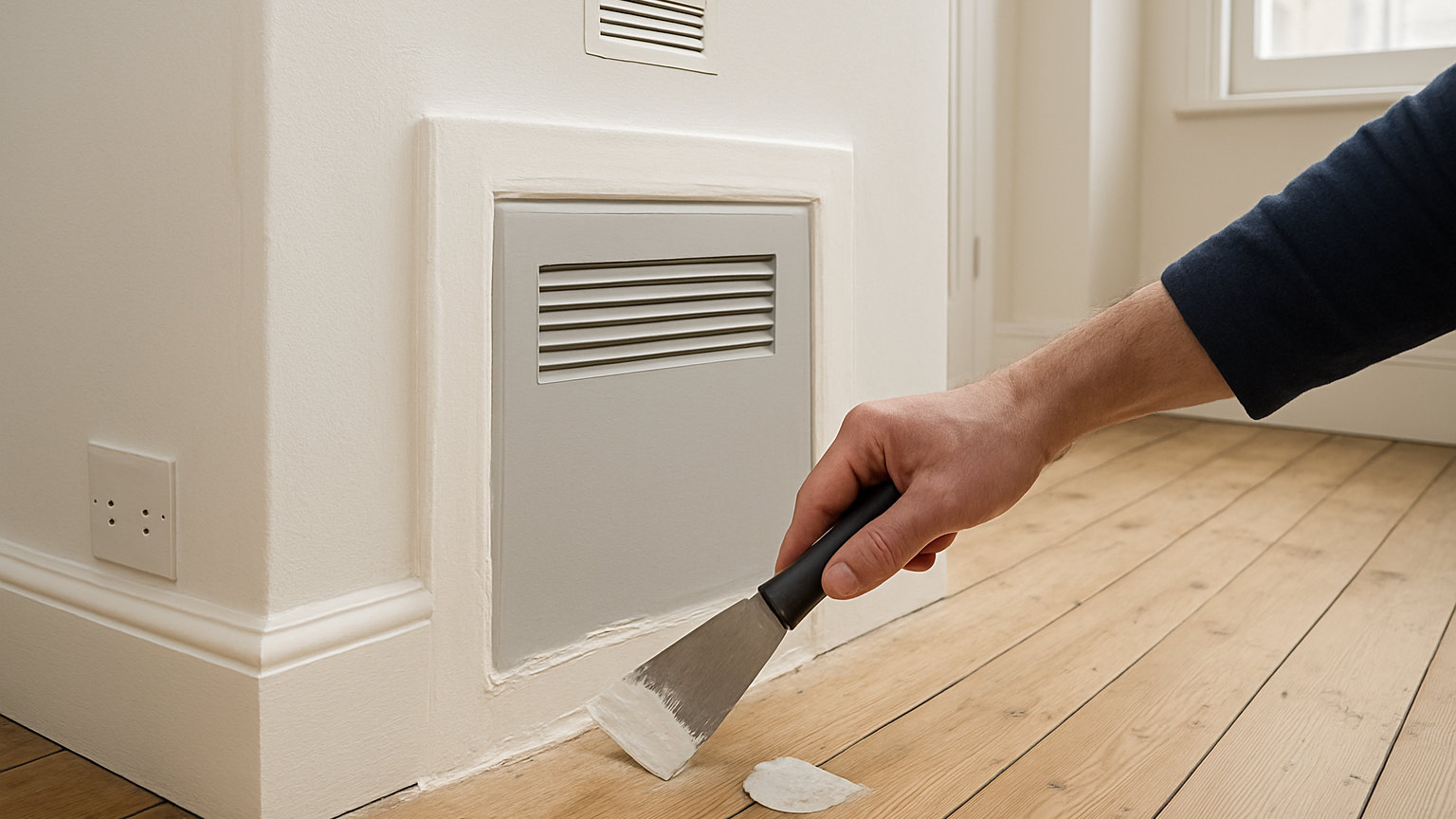
- Fit a vent at the bottom, in the fireplace opening or in the chimney breast, allowing air into the flue
- Where the opening is being closed with board or blockwork, build a vent into it
- A vent of around 1500 to 2000mm² free area is commonly used for this purpose; take advice for your situation
- Keep the vent clear and unblocked thereafter
Capping the top is roof work. Use a roofer or a sweep with proper access.
Step 4: removing a fireplace entirely
- The opening can be closed with blockwork or board, plastered, and a vent built in
- A lintel or the existing one must support the brickwork above
- Removing a chimney breast is structural work, since the stack above must be supported. It needs proper design and is notifiable under Building Regulations
- Never remove a chimney breast in a flat or a party wall situation without professional advice, since the neighbouring property may rely on it
Step 5: other chimney draughts
- Air can come down a flue and out around a fire surround or a hearth
- Seal the joint between the surround and the wall with caulk
- Seal around the hearth where it meets the floor
- An old air vent in the chimney breast serving a removed appliance can be sealed only if the flue is vented elsewhere
Step 6: if the fire is in use
Reducing draught without blocking anything.
- A throat restrictor or a register plate reduces the flue opening when the fire is not lit, fitted by a sweep or installer
- Glass doors on a fireplace
- A properly sized stove instead of an open fire, which is far more efficient and draws less air
- A stove needs its own air supply, and modern installations frequently use a direct external air supply
- Have the appliance and the flue checked annually, and swept as recommended
Damp on a chimney breast
Common, and worth understanding the causes.
- A flue sealed at both ends, trapping moisture
- Hygroscopic salts from soot, drawing moisture from the air
- Cracked flaunching on the stack top
- Failed flashings around the stack
- Eroded pointing on the stack
- A missing or failed chimney damp proof course
- Rain entering an uncapped pot
Salt-contaminated plaster will not dry out and needs replacing with a renovating plaster once the source is fixed.
If it goes wrong
Damp appeared after blocking the chimney: it has been sealed at both ends. Vent it.
Smoke filled the room: a balloon or cover was left in. Remove it and ventilate.
Balloon keeps deflating: soot and debris have punctured it. Sweep the flue and replace it.
Cold draught remains: check around the surround and the hearth as well as the flue.
CO alarm sounds: ventilate, turn the appliance off, leave, and call 0800 111 999.


