
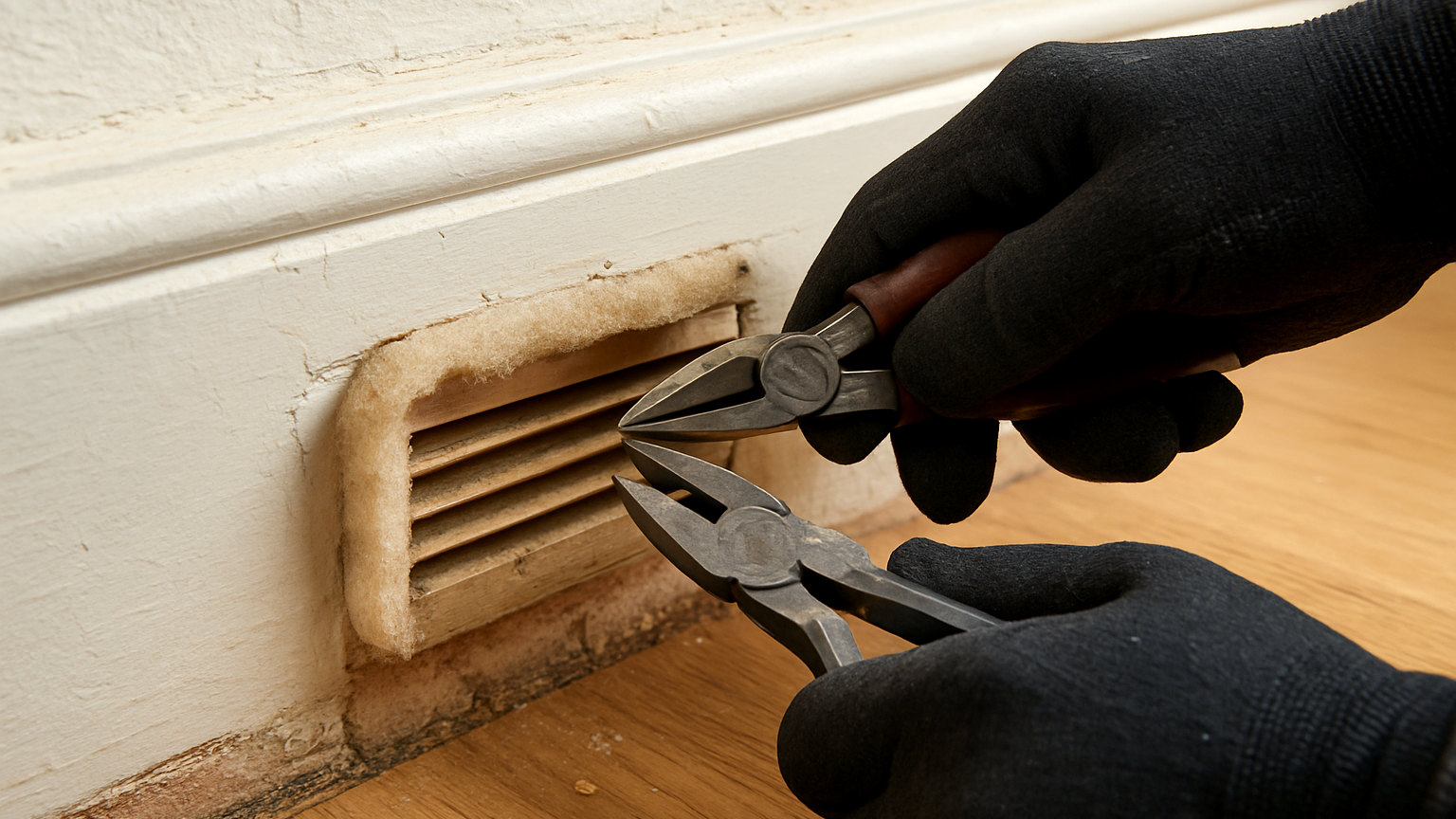
Draught-proofing is worthwhile, and some of what looks like a draught is deliberate ventilation. Sealing the wrong one causes damage, and in one case can be fatal.
The absolute rule
Never block a vent serving a room with a fuel-burning appliance.
An open fire, a gas fire, a solid fuel stove, an oil boiler or an open-flued gas boiler needs a permanent supply of combustion air. Restricting it can cause incomplete combustion, which produces carbon monoxide.
- Carbon monoxide has no colour, no smell and no taste
- Symptoms are headaches, dizziness, nausea, breathlessness and confusion, frequently mistaken for flu
- Symptoms typically improve when you leave the property
- Others in the house, including pets, may be affected at the same time
Fit an audible carbon monoxide alarm to the current British Standard in any room with a fuel-burning appliance, and test it regularly.
If an alarm sounds or you suspect carbon monoxide: open windows, turn the appliance off, leave the building, and call 0800 111 999 from outside.
Combustion air vents
Usually a wall vent or a floor vent in the same room as the appliance, sometimes with an adjustable cover.
- They are sized for the appliance, so an apparently oversized vent is not an error
- Never block, cover, tape over or furnish over one
- Never fit a closable cover to one that is meant to be permanent
- Do not seal a room's other draughts so thoroughly that the appliance is starved
- A stove or boiler burning poorly, with a lazy yellow flame or sooting, may be short of air
Where you are draught-proofing a room containing an appliance, get the appliance and its ventilation checked by a registered engineer.
Underfloor air bricks
The vents at low level in an external wall, below floor level.
- They ventilate the void under a suspended timber floor
- Air must cross the void from one side of the house to the other
- Blocking them causes the joists and floorboards to rot, which is expensive and structural
- They also disperse any ground gases, including radon in affected areas
Check yours are clear:
- Walk round the outside of the house and find every air brick
- Clear soil, leaves, debris and cobwebs from each
- Check none has been rendered, painted or built over
- Check raised paving, decking or a flowerbed has not buried one
- Fit a periscope vent where the ground level has risen and cannot be lowered
- Check none has been blocked internally when insulation was added
Trickle vents
The small slotted vents in the head of a window frame.
- They provide background ventilation, a small continuous air change that carries moisture away
- Leave them open all year, including winter
- Closing them is a very common cause of condensation and mould
- The heat lost is small; the moisture removed is not
- Clean them periodically, since they clog with dust and paint
Where windows have no trickle vents and the house suffers condensation, they can be retrofitted.
Extract ventilation
Fans in bathrooms, kitchens, utility rooms and WCs.
- They remove moisture at source, which is where it is easiest to remove
- Run them during and for at least 15 minutes after cooking or showering
- Do not disable a fan because it is noisy or draughty
- Check the fan actually ducts to outside, not into the loft or a void
- Check the external grille is clear and the backdraught shutter works
- A recirculating cooker hood removes no moisture at all; it only filters grease
Typical extract rates referred to in the Building Regulations are around 15 litres per second for a bathroom, 30 for a utility room, 6 for a WC, and 30 over a hob or 60 elsewhere in a kitchen.
The gap under internal doors
- Deliberate. It provides replacement air for an extractor fan
- A bathroom fan with the door shut and no undercut cannot move air
- Do not draught-proof the bottom of a bathroom, kitchen or WC door
- An undercut of around 10mm above the floor finish is commonly used
Disused chimneys
A specific and important rule.
A capped or blocked flue must be ventilated at both ends, never sealed at both.
- A flue sealed top and bottom traps moisture inside the stack
- The moisture condenses, saturates the brickwork and shows as damp on the chimney breast inside
- Salts from old soot deposits draw moisture in and make it worse
- Fit a vented cowl at the top and an airbrick or vent at the bottom
Passive stack and MVHR
- Passive stack ventilation: ducts from wet rooms to roof level, working by natural buoyancy. Never block the terminals
- MVHR, mechanical ventilation with heat recovery: a whole-house system supplying and extracting air while recovering heat. Never block a supply or extract terminal, and change the filters as scheduled
- In a house with MVHR, sealing the fabric is intended; blocking the terminals is not
The balance
Seal the uncontrolled gaps. Keep the deliberate openings.
- Uncontrolled: gaps around frames, under skirtings, through floors, at the loft hatch, around services
- Deliberate: air bricks, combustion air vents, trickle vents, extract fans, door undercuts, flue vents
Draught-proofing without ventilation produces condensation, mould and damp, and can be dangerous where there is an appliance.
If it goes wrong
Condensation started after draught-proofing: ventilation has been reduced. Open trickle vents and check extraction.
Fire or stove burning poorly: stop using it, restore ventilation and get it checked by a registered engineer.
Air brick buried by paving: fit a periscope vent, or lower the ground.
Damp on a chimney breast: the flue may be sealed at both ends. Vent it.
CO alarm sounds: ventilate, turn the appliance off, leave, and call 0800 111 999.
A summary
- Never block a vent serving a room with a fuel-burning appliance
- Keep underfloor air bricks clear, or the joists rot
- Leave trickle vents open all year
- Do not draught-proof the bottom of a bathroom or kitchen door
- A disused flue is vented at both ends, never sealed at both
- Seal the uncontrolled gaps and keep the deliberate openings


