
The measures that save the most are rarely the ones people start with. This is a practical order of works, from free to expensive.
Free: this weekend
No cost beyond time, and worth doing before anything else.
- Bleed the radiators, and check the boiler pressure afterwards
- Free any seized TRV pins, which are the commonest cause of a cold radiator
- Balance the system if far radiators run cool
- Move furniture clear of radiators, and stop drying washing on them
- Close curtains at dusk, not at bedtime
- Set the room thermostat to the lowest comfortable temperature and leave it there
- Lower the boiler flow temperature on a modern condensing boiler, commonly to around 55 to 60 degrees for heating
- Clear the underfloor air bricks outside
- Open the trickle vents and leave them open
- Check every extractor fan works and ducts to outside
- Do the smoke survey and write the list
Very cheap: under a modest budget
Materials only, a weekend of work, and the largest comfort improvement per pound spent.
- Draught-proof the loft hatch: insulation board, a compression seal and two latches
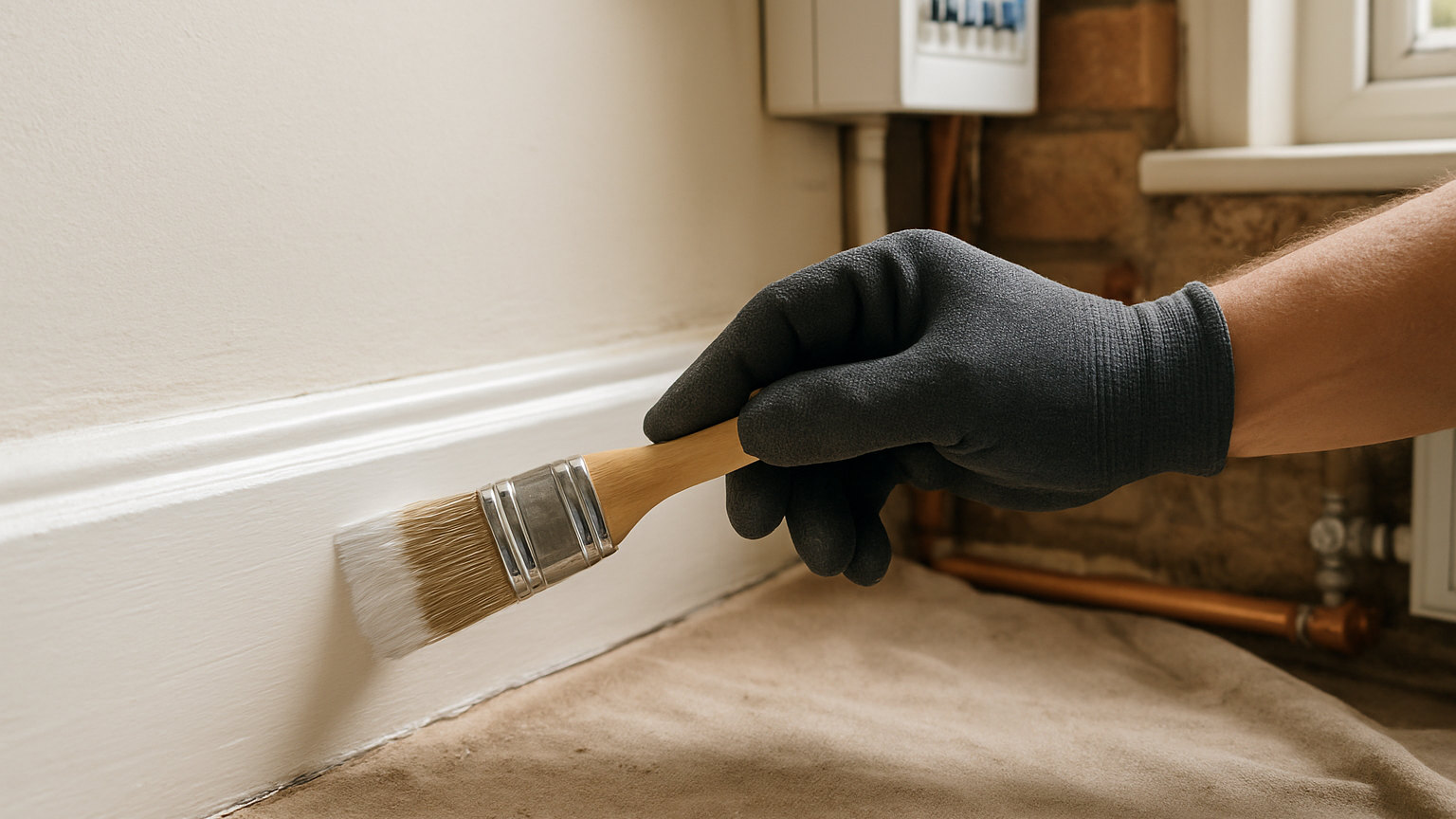
- Seal the skirting to floor joint throughout, with caulk or a moulding
- Fit a chimney balloon or draught excluder to any unused fireplace, with a reminder tag
- Fit a threshold brush strip to external doors
- Seal around external doors and windows with compression or brush seals
- Fit a letterbox brush and a keyhole cover
- Caulk the frame to wall joints, inside and out
- Seal around pipes and cables through floors and walls
- Fit socket box seals on external walls
- Fit reflective panels behind radiators on solid or uninsulated external walls
- Fit a hot water cylinder jacket, or upgrade a thin one
- Lag pipework in the loft, garage and under floors
- Fill floorboard gaps with flexible strips
Almost all of this is achievable in a weekend and it addresses the air leakage that accounts for a large share of the loss.
Cheap: a few hundred pounds
- Top up loft insulation to around 270mm, with eaves trays to keep the airway clear
- Fit heavy lined or interlined curtains, with a pelmet to close the convection loop
- Secondary glazing film kits for a winter, or on rooms used least
- Insulate the ceiling of an integral garage below a bedroom
- Fit or upgrade heating controls: a programmer, a room thermostat and TRVs
- Have the heating system serviced and inhibitor topped up
Mid cost
- Permanent secondary glazing, which is far cheaper than replacement windows and very effective
- Professional sash window draught-proofing, with routed brush seals and an overhaul
- Suspended floor insulation, best combined with recarpeting a room
- Cavity wall insulation, subject to an exposure and condition assessment
- A smart or zoned heating control system
- Repair or replace failed sealed glazing units
Expensive: leave until last
- Replacement windows. Rarely the best value first step, and worth doing when the windows need replacing anyway
- Solid wall insulation. The biggest single measure and the one most easily done badly. Needs design, not just installation
- Boiler or heating system replacement. Last, because a better-insulated house needs a smaller system
- A heat pump. Works best in a well-insulated, low-temperature-ready house, so the fabric work comes first
Fabric first, then controls, then the heat source. Doing it in the other order means paying for capacity you no longer need.
The ventilation rule, throughout
Repeated because it matters at every stage.
- Never block a vent serving a fuel-burning appliance
- Never block an underfloor air brick
- Leave trickle vents open
- Keep extractor fans working and ducted outside
- Do not seal the gap under a bathroom or kitchen door
- Vent a disused flue at both ends
- Fit an audible carbon monoxide alarm in any room with a fuel-burning appliance
Draught-proofing without ventilation produces condensation, mould and damp. Seal the uncontrolled gaps and keep the deliberate openings.
Measuring whether it worked
- An infrared thermometer, taking readings before and after
- A hygrometer, aiming for 40 to 60 per cent relative humidity
- Smart meter data, comparing similar weeks in similar weather
- Whether the thermostat can be set a degree lower and still feel comfortable
- Whether the cold rooms are now usable
Comfort is the better measure. If you can turn the heating down and still feel warm, the work has done its job.
Getting help
- An EPC gives a broad indication and a list of suggested measures
- A retrofit assessment gives a far more detailed picture
- Independent advice from someone not selling installation is worth paying for before a large measure
- Check current grant schemes through an official source
- Decline unsolicited offers and get independent quotes
If it goes wrong
Condensation after the work: ventilation has been reduced. Restore it.
Bills unchanged: compare like-for-like weather, and check the controls are set sensibly.
One room still cold: work through the cold room checks specifically.
Tempted to start with new windows: do the cheap measures first and reassess.
Offered a free whole-house package: take independent advice before agreeing.
A summary
- Do the free measures this weekend: bleed, balance, free the TRVs, close curtains at dusk
- Then the cheap sealing work, which addresses the largest share of the loss per pound
- Then loft insulation, cylinder and controls
- Secondary glazing before replacement windows
- Solid wall insulation and heating replacement last
- Keep the deliberate ventilation open at every stage


