
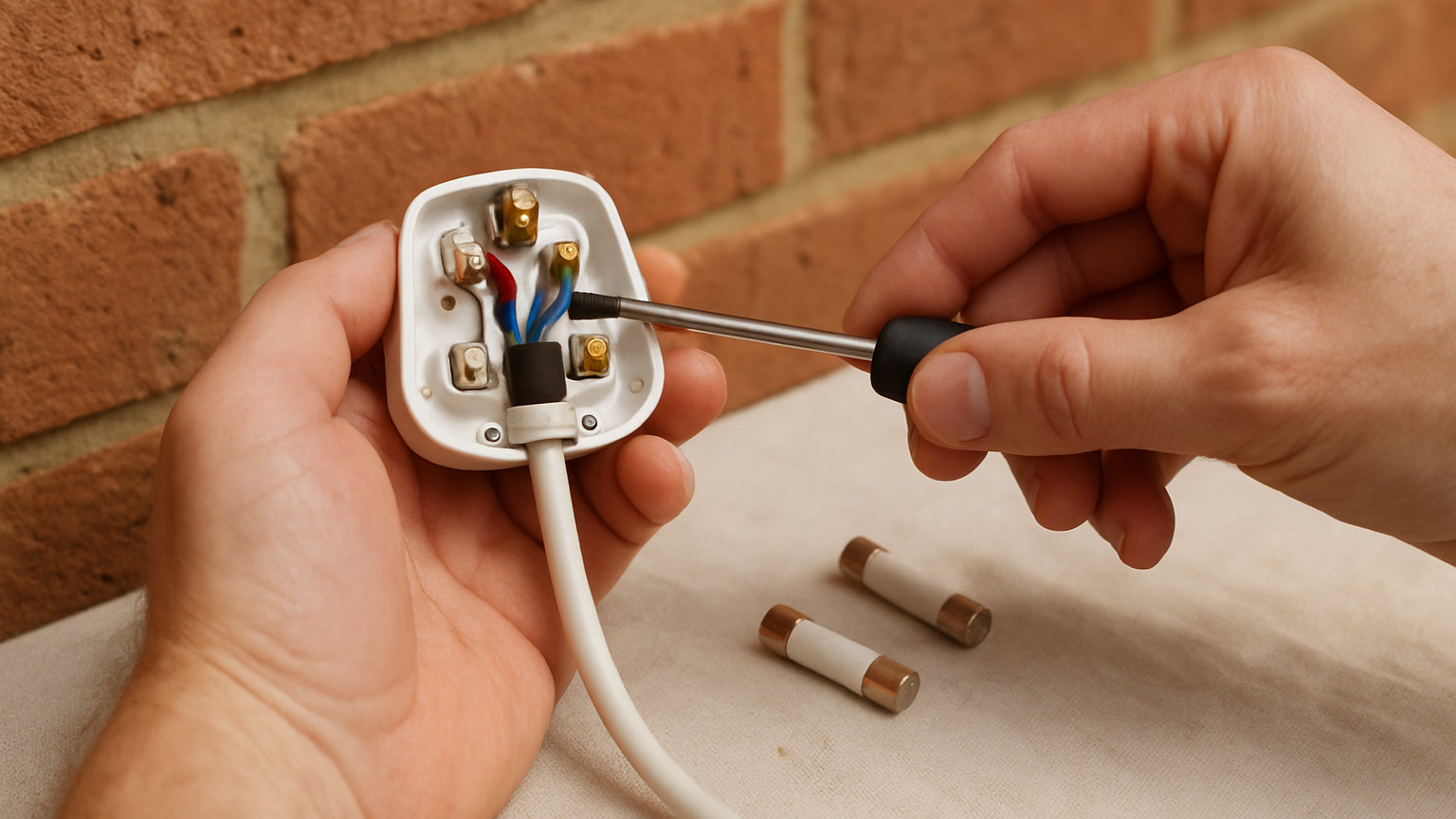
The fuse in a UK plug protects the flex, not the appliance. Fitting the right one matters, and fitting anything other than a proper fuse is dangerous.
Which rating
UK plug fuses are made to BS 1362. In practice there are two common ratings.
- 3A: appliances up to about 700W. Lamps, radios, televisions, computers, chargers, most electronics
- 13A: appliances above about 700W. Kettles, toasters, irons, heaters, washing machines, vacuum cleaners, power tools
5A and 10A fuses exist and are uncommon domestically.
Check the appliance rating plate first. Many manufacturers state the fuse required, and where they do, use that.
Working it out
Divide the wattage by 230, the nominal UK voltage, to get the current in amps, then choose the next fuse size up.
- A 500W appliance draws about 2.2A, so 3A
- A 3000W kettle draws about 13A, so 13A
- A 1000W appliance draws about 4.3A, so 13A is the next available common size
Never fit a larger fuse than needed. The fuse protects the flex, and an oversized fuse allows a thin flex to overheat.
Never use anything other than a proper fuse. Foil, wire, a nail or a coin in a fuse holder is a fire waiting to happen.
What you need
- A replacement BS 1362 fuse of the correct rating
- A small flat screwdriver
- Wire strippers, if rewiring
- A cross-head screwdriver
Step 1: change the fuse
- Unplug the appliance
- On most plugs the fuse sits in a small holder that levers out with a screwdriver
- On others, open the plug by undoing the large screw between the pins
- Lift the old fuse out
- Check the rating printed on the new one
- Push the new fuse into the clips
- Close the plug and tighten the screw
Step 2: wiring a rewireable plug
Most plugs are now moulded on, and rewireable plugs are still used and still sold.
Current cable colours:
- Brown: live
- Blue: neutral
- Green and yellow: earth
Older flex colours, pre-1970: red live, black neutral, green earth. If you find these, treat the appliance with suspicion and consider replacing the flex.
Step 3: the terminals
Looking into an open plug with the cable entry at the bottom:
- Live, brown: top right, connected through the fuse
- Neutral, blue: top left
- Earth, green and yellow: the top centre pin
A useful memory: bLue to the Left, bRown to the Right.
- Strip about 40mm of the outer sheath, without nicking the inner insulation
- Strip about 8mm of insulation from each conductor
- Twist the strands of each conductor neatly
- Cut each conductor to length so it reaches its terminal without strain, with the earth slightly longer than the others
- Insert each fully into its terminal and tighten the screw firmly onto the copper, not onto the insulation
- Tug each one gently to confirm it is secure
- Make sure the cord grip clamps the outer sheath, not the individual conductors
- Check no stray strands are loose
- Fit the correct fuse
- Close the plug and tighten the screw
The earth is cut longer deliberately, so that if the cable is pulled hard, the earth is the last connection to come free.
Double insulated appliances
Some appliances carry a symbol of two concentric squares, meaning double insulated. They have two-core flex with no earth.
The plug's earth terminal is simply left empty. Do not connect anything to it.
When a fuse keeps blowing
A fuse blowing repeatedly is a symptom, not an inconvenience.
- A fault in the appliance
- A damaged flex, particularly where it enters the appliance or the plug
- A failing motor or heating element
- Water ingress
- The wrong fuse fitted, too small for the load
Never fit a larger fuse to stop it blowing. Have the appliance checked or replaced.
Signs a plug or flex needs attention
- The plug feels warm in use
- Scorching, discolouration or a burning smell
- Cracked casing or bent pins
- The flex is frayed, taped, kinked or damaged
- The cord grip is not holding the sheath
- The plug is loose in the socket
Replace rather than repair anything in that state.
If it goes wrong
Fuse blows immediately: a short circuit in the appliance or flex. Stop using it.
Plug getting warm: a loose connection or an overloaded plug. Replace it and check the fuse rating.
Appliance does not work with a new fuse: the fault is in the appliance.
Old red and black flex: very old. Consider replacing the flex or the appliance.
Not sure of the rating: check the rating plate, or fit 3A for anything under 700W.
Fused connection units
The same fuse principle applies to a fused connection unit, the switched or unswitched plate used to connect a fixed appliance such as a boiler, an extractor fan or a towel rail.
- It contains a BS 1362 fuse in a small carrier on the front
- Choose the rating by the appliance, the same way as a plug
- Isolate the circuit before removing the fuse carrier on some designs
- A boiler is commonly on a 3A fuse; check the manufacturer's requirement
A summary
- 3A below about 700W, 13A above, and check the rating plate first
- Never fit a larger fuse than needed, and never anything other than a proper fuse
- Brown right, blue left, green and yellow to the centre earth pin
- Cut the earth slightly longer than the other two
- The cord grip must clamp the outer sheath
- A fuse that keeps blowing is a fault, not an inconvenience


