
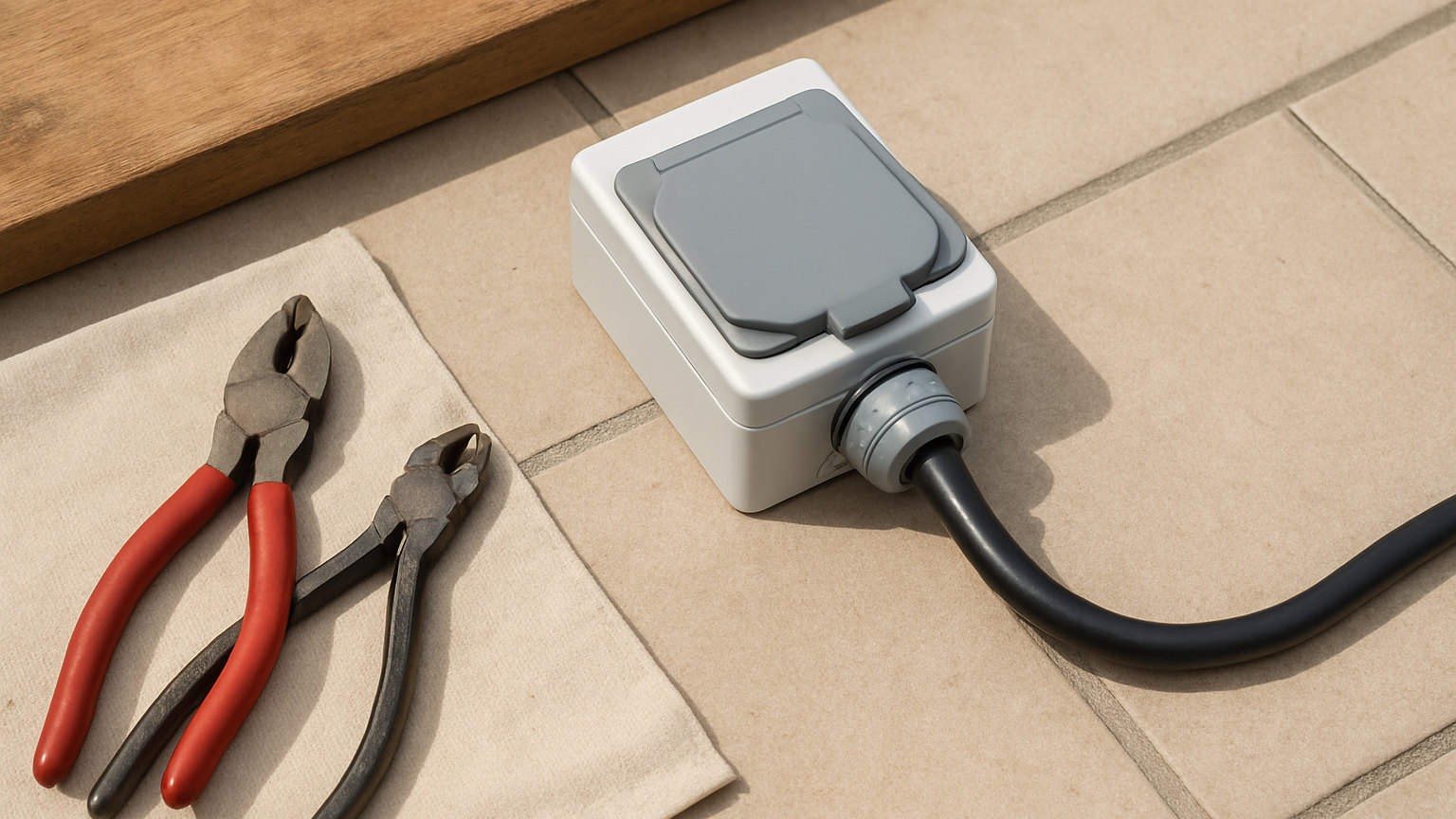
Using electricity outdoors combines wet ground, trailing leads and cutting tools. It is the situation in which RCD protection matters most.
The single most important rule
Always use 30mA RCD protection with any outdoor electrical equipment.
- Where the socket circuit already has RCD protection at the board, that is sufficient
- Where it does not, use a plug-in RCD adaptor at the socket, every time
- Test the adaptor with its test button before each use
- An RCD socket can be fitted to provide protection at a specific outlet
Mowers, hedge trimmers, strimmers and pressure washers all combine a cutting or high-pressure action with a flexible lead on wet ground.
Using garden tools safely
- Check the RCD protection and test it
- Inspect the lead along its full length for cuts, nicks and damage before each use
- Check the plug and any connector for damage and moisture
- Keep the lead behind you and over your shoulder, away from the cutting path
- Work away from the socket, not towards it
- Do not use electric tools in the rain or on wet grass
- Unplug before clearing a blockage or changing a blade
- Unplug and coil the lead away afterwards
Cutting through your own lead is a common accident. The RCD is what stops it being a fatal one.
Extension leads outdoors
- Use a lead rated for outdoor use, with an appropriate IP rating on the connectors
- Uncoil the drum completely. A coiled cable drum under load overheats and can melt or catch fire, and drums have a much lower rating when coiled
- Do not run leads through doorways where they will be trapped
- Do not join leads together in a puddle
- Do not leave leads outside overnight or in the rain
- Keep connections off the ground
Outdoor sockets and fittings
Everything outdoors needs the right IP rating.
- IP44 minimum for a socket or fitting in a sheltered position
- IP65 or higher where exposed to driving rain or hosing
- Outdoor sockets should have a weatherproof hinged cover with a seal, and remain rated with a plug inserted
- Position them under an overhang or in a sheltered spot where possible
- Never use an indoor socket, extension or fitting outdoors
What is notifiable
- Installing a new circuit is notifiable everywhere, which includes a supply to a shed, garage or garden office
- In Wales, outdoor electrical work generally remains notifiable
- In England, adding an outdoor socket to an existing suitable circuit ceased to be notifiable in 2013, though it must still comply with BS 7671 and be RCD protected
- Anything involving a buried cable or an outbuilding supply is realistically an electrician's job
Supplying a shed, garage or garden office
A job for a registered electrician, and worth understanding.
- A dedicated circuit from the consumer unit, not a spur or an extension lead
- Steel wire armoured cable for the buried run, sized for the load and the length
- Buried at an adequate depth, typically at least 450mm under a garden and deeper under a drive, with marker tape above it
- A small consumer unit in the outbuilding, with its own protection
- Proper earthing arrangements, which need care where the supply type requires it
- Certification and notification
Never run a domestic extension lead permanently to an outbuilding. It is not designed for it and offers no protection.
Garden lighting
- Low voltage systems, typically 12V with a transformer indoors or in a protected enclosure, are much safer and easier
- Mains garden lighting requires proper outdoor-rated fittings, RCD protection and correctly installed cable
- Solar lighting avoids the issue entirely
- Never bury unprotected mains cable in a garden
Ponds and water features
- Pond equipment must be suitable for the purpose and correctly rated
- RCD protection is essential
- Isolate before putting hands in the water for any reason
- Inspect cables regularly for damage from frost, tools and animals
- Zones apply around swimming pools; those are a specialist matter
Before digging
- Assume there are services underground until you know otherwise
- Use a cable avoidance tool where possible
- Look for evidence of routes: meter positions, outbuildings, external lights, gas meter
- Dig trial holes by hand rather than driving a spade or a fork in blind
- Take particular care near the house and along boundaries
Seasonal checks
- Inspect outdoor sockets and fittings each spring for water ingress and damage
- Check covers still seal and hinges still work
- Check leads and tools before first use of the season
- Test RCDs and RCD adaptors
- Store tools and leads indoors over winter
If it goes wrong
Cut through a lead: do not touch it. Isolate at the consumer unit first, then remove the plug from the socket.
RCD tripping only in wet weather: water in an outdoor socket or fitting. Isolate it and get it checked.
Outdoor socket full of water: isolate the circuit and have it replaced.
Dug into a cable: do not touch it. Isolate at the board and call an electrician.
Extension lead warm: uncoil it fully and check the load.
A summary
- Always use 30mA RCD protection outdoors, at the board or with a plug-in adaptor
- Keep the lead behind you and work away from the socket
- Uncoil cable drums completely before use
- IP44 minimum outdoors, IP65 where exposed
- A supply to an outbuilding needs armoured cable, a new circuit and an electrician
- Assume there are buried services before digging
Charging an electric vehicle
- A dedicated charge point on its own circuit is the correct arrangement, installed by an approved installer and notifiable as a new circuit
- Charging from a domestic socket with an extension lead is not appropriate: the load is high and sustained
- A granny lead should go into a suitable dedicated outdoor socket, not an extension
- The installer will assess the supply capacity and the earthing arrangement


