
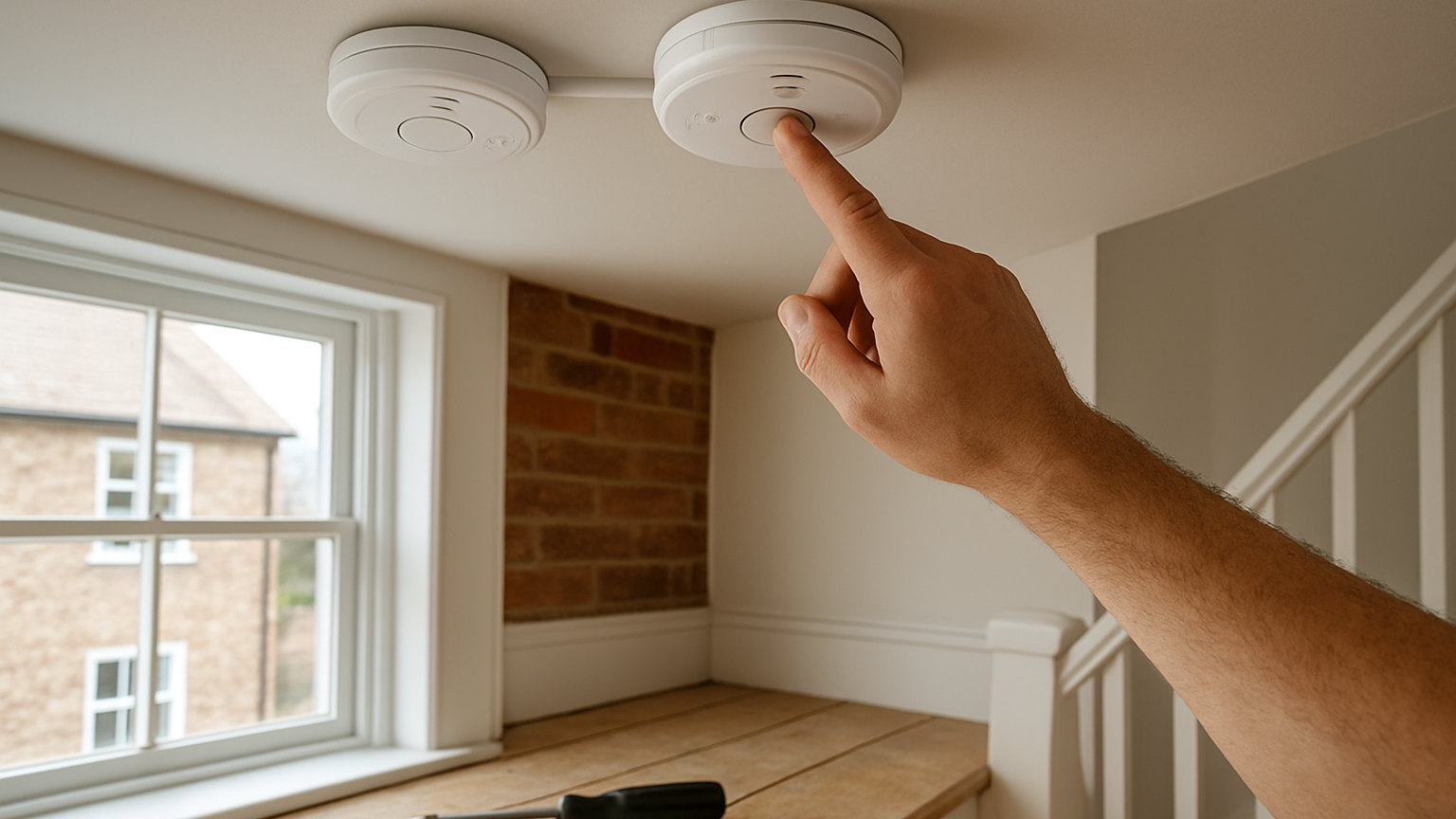
Working alarms are the cheapest life safety measure in a house. The requirements differ across the UK, and the practical advice does not.
Smoke alarms: where they go
As a minimum:
- One on every storey, in the circulation space: hall and landing
- In any room used as a principal living space
- Mounted on the ceiling, at least 300mm from any wall or light fitting
- In the centre of the room or hallway where possible
Not in a kitchen or bathroom, where steam and cooking cause false alarms. A heat alarm goes in a kitchen instead.
Heat alarms
- Fitted in kitchens and sometimes garages
- Triggered by temperature rather than smoke, so cooking does not set them off
- They respond later than a smoke alarm, which is why they supplement rather than replace them
- Should be interlinked with the smoke alarms
Interlinking
Interlinked alarms all sound together when any one detects.
This matters because a fire starting downstairs at night needs to wake people upstairs, and a single alarm two floors away will not.
- Hard-wired interlinked: mains powered with a battery backup, wired together
- Radio interlinked: wireless, easier to retrofit, available in battery and mains versions
Interlinking is the single biggest improvement you can make to an existing arrangement of standalone alarms.
The rules
They differ by nation and change, so check the current position locally.
Scotland: since February 2022, every home must have interlinked alarms: one smoke alarm in the main living room, one in every circulation space on each storey, and a heat alarm in the kitchen, plus a carbon monoxide alarm where there is a fuel-burning appliance.
England: Building Regulations require mains-powered interlinked alarms in new build and in certain works such as loft conversions. Rented homes require at least one smoke alarm per storey, and a carbon monoxide alarm in any room with a fixed combustion appliance other than a gas cooker.
Wales and Northern Ireland have their own requirements.
The Scottish standard is a good target for any home, whatever the legal minimum where you live.
Carbon monoxide alarms
Carbon monoxide has no smell, no colour and no taste. An alarm is the only way to detect it.
Fit one in any room containing a fuel-burning appliance:
- Gas boiler, fire or water heater
- Solid fuel stove or open fire
- Oil boiler
- Any room with a flue passing through it
Placement:
- Roughly 1 to 3m horizontally from the appliance
- At head height, or on the ceiling at least 300mm from a wall
- Not directly above the appliance, in a cupboard, or next to a window or door
- Follow the manufacturer's instructions, which take precedence
Buy one marked to the current British Standard with an audible alarm. A colour-change spot indicator is not an alarm and will not wake anyone.
Symptoms of carbon monoxide exposure
- Headaches, dizziness, nausea, breathlessness, collapse, confusion
- Frequently mistaken for flu, and symptoms typically improve when you leave the property
- Others in the household, including pets, affected at the same time
If the alarm sounds or you suspect carbon monoxide: open windows, turn the appliance off, leave the building, call 0800 111 999 from outside, and seek medical advice.
Other warning signs: a lazy yellow or orange flame rather than crisp blue, sooting or staining around an appliance, excessive condensation, and a pilot light that keeps going out.
Testing and maintenance
- Test every alarm weekly using the test button
- Vacuum the alarm gently every few months to clear dust and insects
- Replace batteries annually in a replaceable-battery alarm, or as soon as it chirps
- Never remove a battery to silence an alarm
- Where an alarm sounds during cooking, ventilate rather than disabling it
Replacement intervals
- Smoke alarms: replace every 10 years, regardless of whether they still test. The sensor degrades
- Carbon monoxide alarms: typically 7 to 10 years. Check the marked expiry date
- Write the installation date on the alarm in marker
- Check the manufacture date when buying, since stock can be old
Sealed ten-year lithium battery alarms avoid annual battery changes and the temptation to remove one. Worth the extra.
Fitting
- Battery and radio-interlinked alarms are straightforward to fit yourself, with two screws into the ceiling
- Check for cables and pipes before drilling
- Mains-wired alarms need an electrician, since they involve a circuit
- Follow the manufacturer's spacing and positioning instructions
Alongside the alarms
- Agree an escape plan and make sure everyone knows it
- Keep escape routes clear
- Close internal doors at night, which slows a fire considerably
- Have gas and oil appliances serviced annually by a registered engineer
- Have chimneys and flues swept annually where in use
If it goes wrong
Alarm chirping intermittently: low battery, or end of life. Replace the battery or the alarm.
False alarms from cooking: it is too close to the kitchen. Relocate it, or fit a heat alarm in the kitchen.
Alarm does not sound on test: replace it immediately.
CO alarm sounds: ventilate, turn the appliance off, leave, and call 0800 111 999.
Unsure of the age: if you do not know, replace it.
A summary
- A smoke alarm on every storey, interlinked, tested weekly
- A heat alarm in the kitchen rather than a smoke alarm
- A carbon monoxide alarm in any room with a fuel-burning appliance
- Audible CO alarms only; a colour-change spot is not an alarm
- Replace smoke alarms every 10 years and CO alarms by their marked date
- Never remove a battery to silence an alarm


