
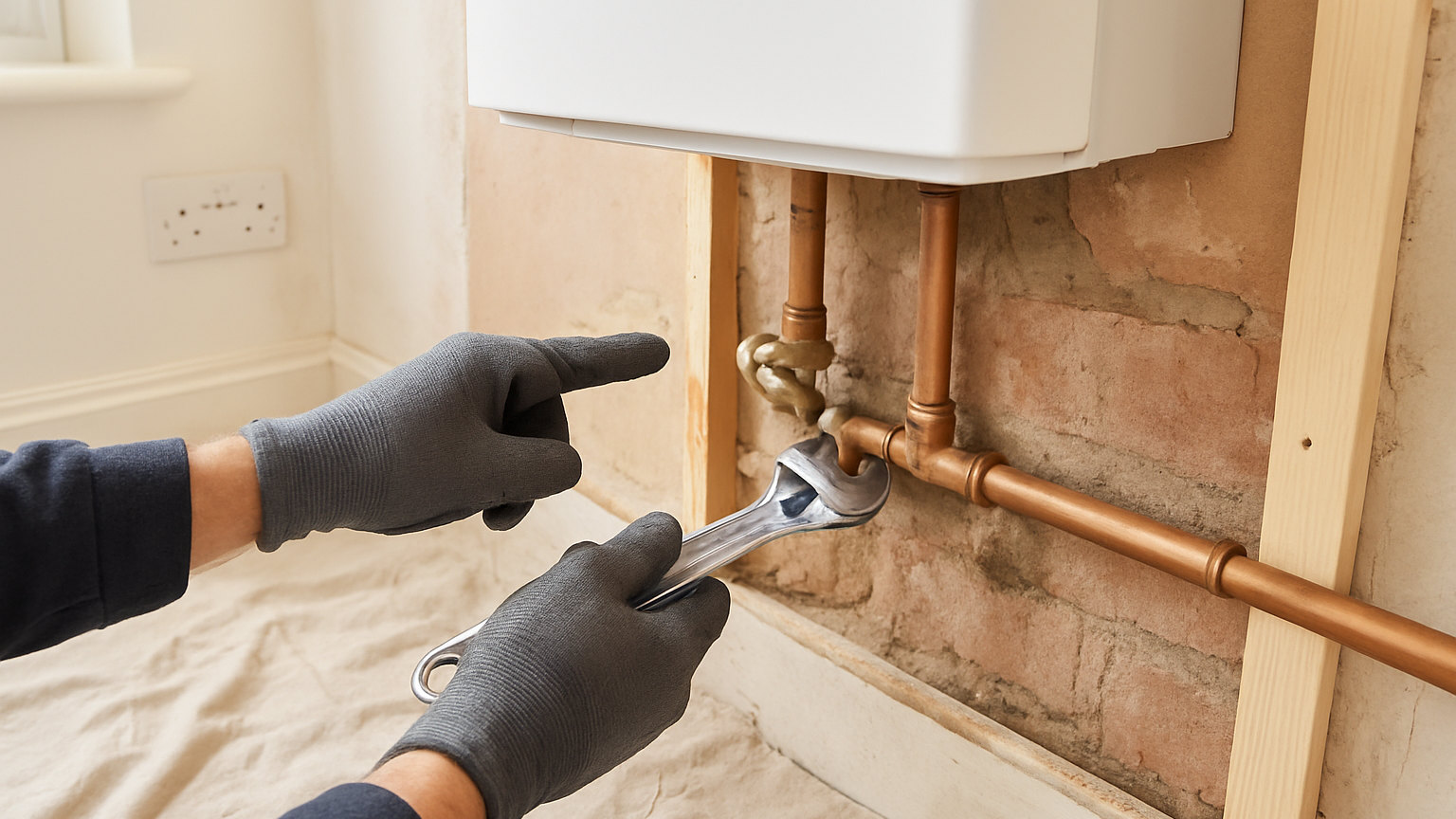
A sealed central heating system runs at a set pressure. Too low and the boiler may lock out; too high and the safety valve discharges.
What the pressure should be
- Cold system: typically 1 to 1.5 bar
- Many boilers show a green band on the gauge marking the acceptable range
- The pressure rises when the system heats, commonly to around 2 to 2.5 bar, which is normal
- Check the boiler manual, since manufacturers differ
Always read the gauge with the system cold.
Do you have a sealed system
- A pressure gauge on the boiler and a filling loop: a sealed system, with a combi or system boiler
- A small tank in the loft feeding the heating, and no gauge: an open-vented system. It tops itself up and there is nothing to repressurise
The rest of this applies to sealed systems.
What you need
- The boiler manual, if you have it
- A flat screwdriver or the boiler's filling key
- A cloth and a small container
- A radiator bleed key
Pressure too low: repressurising
- Turn the boiler off and let the system cool
- Find the filling loop: a braided silver flexible hose with a small valve at each end, usually under the boiler. Some boilers have an internal filling device operated with a key or a lever
- Check both ends are securely connected
- Open one valve fully
- Open the second valve slowly. You will hear water flowing
- Watch the gauge closely
- Close the second valve as soon as it reaches 1.5 bar, then close the first
- Disconnect the flexible loop if it is the detachable type
- Turn the boiler back on
- Recheck the pressure once it has heated and cooled again
Fill slowly. It rises faster than expected and overshooting means letting water out again.
Pressure too high
Above about 2.5 to 3 bar cold, or the safety valve discharging outside.
- Check the filling loop valves are fully closed. A loop left slightly open keeps filling the system, which is the most common cause
- Turn the heating off and let it cool
- Bleed a radiator, catching the water in a container
- Release small amounts and check the gauge between each
- Stop at 1.5 bar
Where the pressure keeps climbing with the loop closed, the filling valve is passing or the expansion vessel has failed. That needs an engineer.
When pressure keeps dropping
Topping up occasionally after bleeding radiators is normal. Topping up weekly is not.
Look for a leak:
- Check every radiator valve and union for weeping or staining
- Look for damp patches or staining on ceilings below pipe runs
- Check under the boiler and around the pump
- Check the pressure relief discharge pipe outside, usually a small copper pipe through the wall. Water dripping from it means the system is discharging
- Lift a floorboard over a suspected run if you can do so safely
- Look for rust marks or white deposits, which indicate a slow historic leak
Common causes of repeated pressure loss:
- A small leak on pipework, frequently under a floor
- A weeping radiator valve or union
- A failed or waterlogged expansion vessel, which is very common. It also causes the pressure to swing widely between hot and cold
- A passing pressure relief valve, discharging outside
- A leaking heat exchanger, which is a boiler repair
The expansion vessel
A sealed vessel with a rubber diaphragm and a gas charge, absorbing the expansion of the water as it heats.
Signs it has failed:
- Pressure rises very sharply when heating, from 1.5 to 3 bar or more
- Pressure drops well below 1 bar when cold
- The safety valve discharges regularly
Recharging or replacing an expansion vessel is a job for a heating engineer.
If the boiler has locked out
- Low pressure is a common cause of a lockout
- Repressurise to 1.5 bar
- Reset the boiler using the reset button, once
- Where it locks out again, note the fault code and call an engineer
- Do not repeatedly reset a boiler that keeps locking out. It is protecting itself for a reason
Safety
Do not attempt any work inside the boiler casing. A boiler is a gas appliance and work on it must be done by a Gas Safe registered engineer.
Using the filling loop, bleeding radiators and reading the gauge are all outside the casing and are householder tasks.
If you smell gas: do not touch any electrical switch, open the windows, turn off the gas at the meter if you can reach it safely, leave the building and call the National Gas Emergency Service on 0800 111 999 from outside.
If it goes wrong
Pressure will not rise: the filling loop valves may be seized, or the loop is not connected.
Overfilled: bleed a radiator to release water down to 1.5 bar.
Pressure swings widely between hot and cold: the expansion vessel. Get it checked.
Water dripping outside from a small pipe: the pressure relief valve is discharging. Get it investigated.
Cannot find the filling loop: some boilers have an internal filling key. Check the manual.
Keeping a record
Worth noting, since it turns a vague worry into evidence.
- Write down the cold pressure reading weekly for a month
- Note each time you top the system up, and by how much
- Note the date of any bleeding, which explains a legitimate drop
- Take that record to the engineer, since a pattern is far more useful than a single reading


