
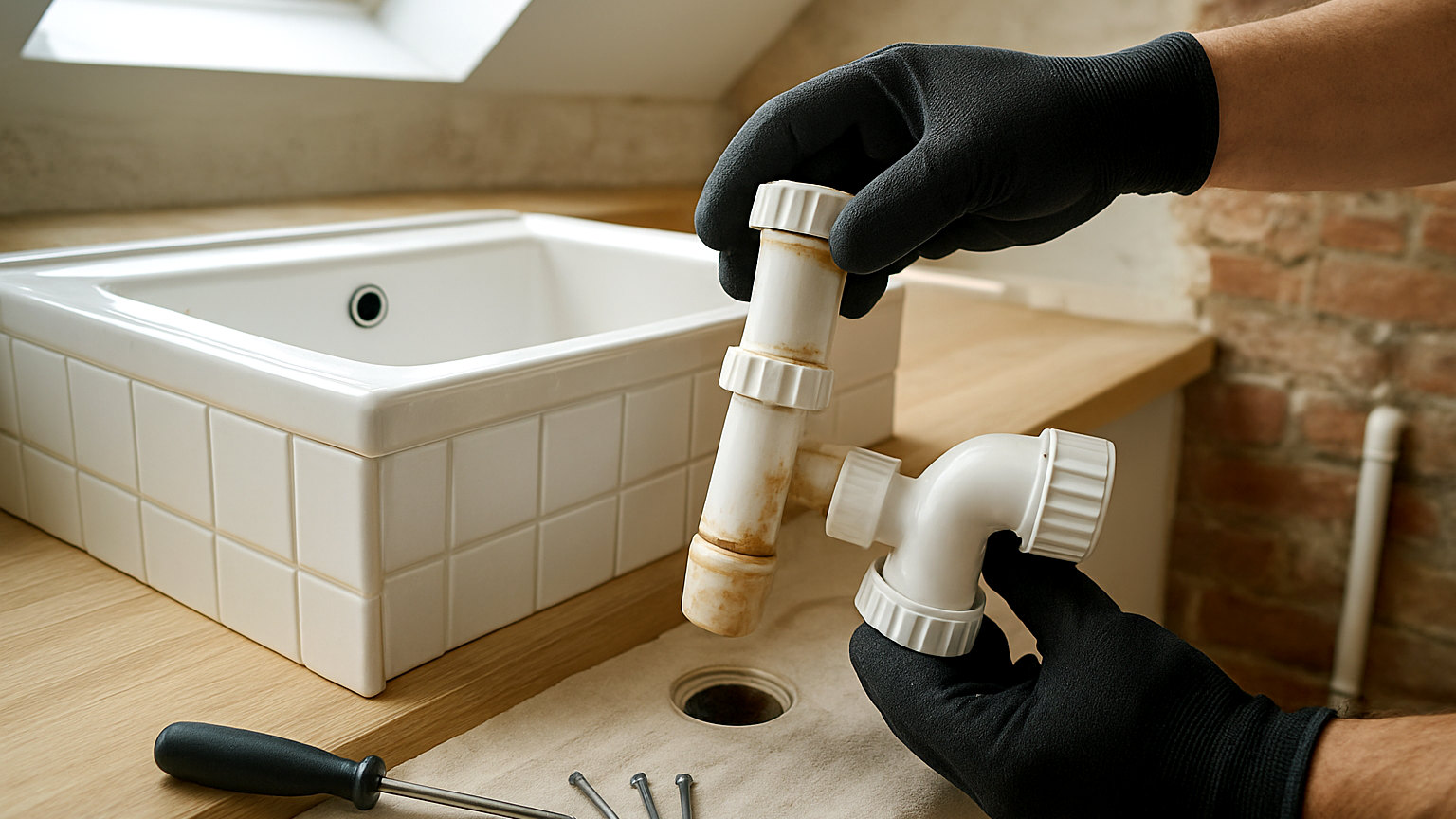
A blocked sink is nearly always a build-up in the trap or the waste pipe just beyond it. Work through the methods in order and the cheapest usually works.
Safety on chemical cleaners
Caustic and acid drain cleaners are dangerous.
- They cause serious burns to skin and eyes
- They generate heat, and can spit back out of the plughole
- Never mix drain cleaners with each other, with bleach, or with anything else. The reaction can produce toxic gas
- Never plunge after using a chemical cleaner: it can splash caustic liquid into your face
- If a chemical cleaner has not worked, the standing water is now caustic. Do not put your hands in it and warn anyone who might
- They can damage older pipework, particularly plastic traps and chrome
Treat them as a last resort, and try the mechanical methods first.
What you need
- A cup plunger, the rubber dome type
- A bucket and towels
- Rubber gloves and eye protection
- An old cloth or a wet rag
- A drain auger or plumber's snake
- Bicarbonate of soda and white vinegar
- Adjustable pliers, or grips
Method 1: hot water and detergent
For a slow-draining sink blocked with grease.
- Squirt a generous amount of washing-up liquid into the plughole
- Pour a kettle of very hot, not boiling, water down slowly
- Do not use boiling water on plastic waste pipes or a plastic trap, which can distort them
- Wait a few minutes and repeat
This alone clears many kitchen sink blockages, since the cause is usually cooled fat.
Method 2: bicarbonate and vinegar
- Remove any standing water
- Pour about 100g of bicarbonate of soda down the plughole
- Follow with around 200ml of white vinegar
- It will fizz. Cover the plughole with a cloth to keep the reaction in the pipe
- Leave for 20 to 30 minutes
- Flush through with hot water
Mild, safe and effective on light build-up.
Method 3: plunge it properly
Technique matters more than force.
- Leave enough water in the sink to cover the plunger cup
- Block the overflow with a wet cloth, held firmly. Without this the plunger pushes air out of the overflow rather than through the blockage
- On a double sink, block the other plughole too
- Seat the plunger squarely over the plughole and press down to expel the air
- Pump vigorously up and down about ten times, keeping the seal
- Pull off sharply on the last stroke
- Repeat several times
The suction on the upstroke does as much as the push, so keep the seal throughout.
Method 4: clean the trap
The U-bend under the sink, which is where most blockages sit.
- Put a bucket underneath, and towels around it
- Unscrew the two large plastic nuts each side of the trap by hand. Use grips gently if they are tight
- Lower the trap and empty it into the bucket
- Clear it out completely, using a bottle brush or an old toothbrush
- Check the waste pipe going into the wall with a torch and clear anything visible
- Check the seals and washers are in place and undamaged
- Refit hand tight, then a little more. Do not overtighten plastic nuts, which cracks them
- Run the water and check for leaks underneath
This is the most reliable method and needs no chemicals at all.
Method 5: a drain auger
Where the blockage is beyond the trap.
- Remove the trap, or feed the auger through the plughole
- Feed the cable into the waste pipe, turning the handle
- When you meet resistance, keep turning to break through or hook the blockage
- Withdraw slowly, turning as you go
- Clean the auger, refit the trap and flush through with hot water
Method 6: outside
Where several fittings are slow, the blockage is in the shared waste or the drain.
- Lift the drain cover outside and look
- Check the gully at the base of the waste pipe for leaves and debris, and clear it by hand with gloves
- Where a chamber is full, the blockage is downstream and may need drain rods
- A blockage affecting the whole house may be the shared sewer, which is the water company's responsibility
Preventing it
- Never pour fat or oil down the sink. Let it cool and put it in the bin
- Use a sink strainer and empty it
- Run hot water and detergent through weekly
- Scrape plates into the bin before washing
- Do not put coffee grounds, rice or pasta down the drain
- In a bathroom, clear hair from the plughole regularly
If it goes wrong
Nothing works: the blockage is further along. Try an auger, then check outside.
Trap leaking after refitting: a washer is missing or misaligned, or the nut is cross-threaded.
Blockage keeps returning: fat build-up, or a fall problem in the waste pipe. A pipe that does not fall enough will keep blocking.
Several fittings blocked at once: the shared waste or the drain, not the sink.
Smell but no blockage: the trap has dried out or been siphoned. Run the tap to refill it.
How long it takes
Hot water and detergent takes five minutes. Plunging takes ten. Cleaning the trap takes twenty, including the mess.
Working through all three in order is quicker than starting with the most drastic and having to clean up afterwards.
A summary
- Hot water and detergent first, which clears most kitchen blockages
- Bicarbonate and vinegar for light build-up
- Plunge with the overflow blocked, keeping the seal
- Clean the trap, which is the most reliable method
- An auger for anything beyond the trap
- Chemical cleaners last, and never after plunging or mixed with anything


