
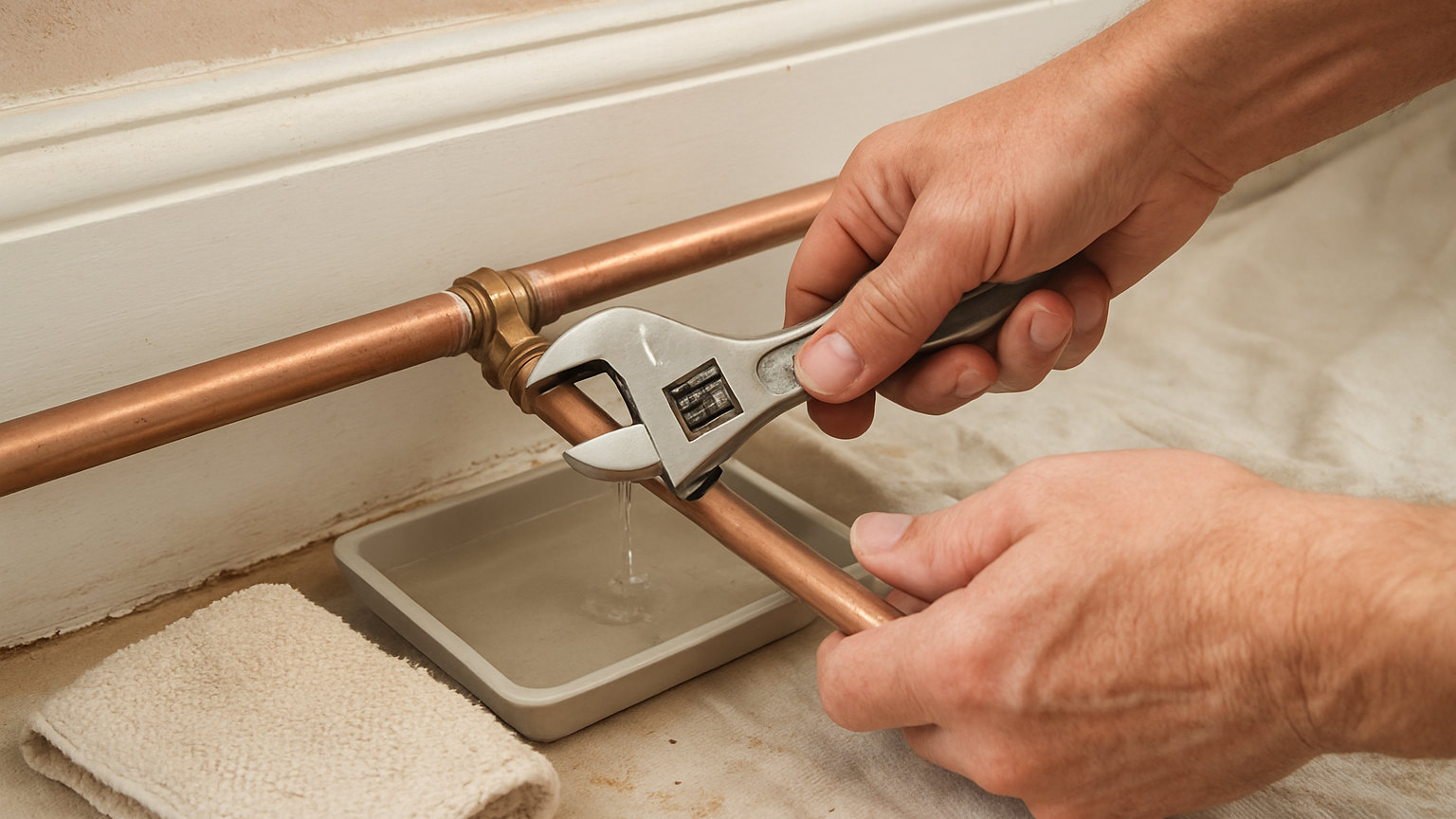
Water expands as it freezes, which is what splits pipes. The split frequently only becomes apparent when the ice thaws and the water starts flowing again.
Step 1: recognise it
- No water, or a trickle, from one or more taps in cold weather
- Other taps still working, which points to one affected run
- Visible frost or ice on an exposed pipe
- A bulge in a pipe, or frost on one section
- Gurgling, or a boiler locking out with a condensate fault
Step 2: turn the water off
- Close the stopcock before doing anything else
- Open the affected tap, so there is somewhere for water to go as it thaws and so you can see when flow returns
- Open other cold taps to reduce pressure in the system
- Have towels and buckets ready
If the pipe has already split, the water will pour out the moment the ice melts. Having the stopcock closed first is what limits the damage.
Step 3: find the frozen section
- Follow the run from the affected tap back towards the supply
- Check the coldest places first: lofts, garages, cellars, outbuildings, under suspended floors, against external walls, and any pipe in an unheated space
- Feel along the pipe: the frozen section will be noticeably colder, and may be frosted
- A pipe that has burst may be split, bulged or have a visible crack
Step 4: thaw it gently
Never use a naked flame, a blowtorch or a heat gun on a frozen pipe. Rapid heating can turn trapped water to steam and burst the pipe, and it is a serious fire risk in a loft.
Safe methods, working from the tap end back towards the frozen section:
- Hot water bottles or wheat bags laid along the pipe
- Towels soaked in hot water, wrapped around and renewed as they cool
- A hairdryer on a low or medium setting, kept moving, and never near standing water
- A fan heater directed at the area from a safe distance
- Simply warming the room and waiting
- Start at the end nearest the tap and work along
- Working towards the tap gives the melting water somewhere to escape
- Be patient: it can take some time
- Watch for water appearing, which means either it has thawed or the pipe has split
Step 5: if it has burst
- Keep the stopcock closed
- Open all taps to drain the system
- Turn off the boiler and the immersion heater
- If water is near any electrics, turn off the consumer unit and do not touch anything wet
- Catch water in containers and move anything valuable
- Call a plumber
- Contact your insurer, and photograph the damage before clearing up
A temporary repair clamp or self-amalgamating tape can hold a small split until a plumber arrives, and it is a stopgap only.
Frozen condensate pipe
A very common winter problem with modern condensing boilers.
The condensate pipe is a small plastic pipe, usually white or grey, running from the boiler to a drain, frequently outside. When it freezes, the boiler shuts down and shows a fault code.
- Locate the external condensate pipe
- Pour warm, not boiling, water along its length, particularly at any bend or the open end
- Or hold a hot water bottle against it
- Once thawed, reset the boiler using the reset button
- Where it refreezes repeatedly, the pipe may need lagging, re-routing internally, or increasing in diameter, which is an engineer's job
Step 6: prevent it next winter
- Lag every pipe in an unheated space: loft, garage, cellar, outbuilding, and against external walls
- Use foam pipe insulation of the correct bore, fitted with no gaps, and tape the joints and bends
- Do not insulate underneath a cold water tank in the loft, so warmth from below can reach it. Insulate the sides and lid instead
- Lag the condensate pipe outside
- Fit an outside tap isolating valve indoors, and drain the tap down each autumn
- Keep the heating on a low frost setting rather than off entirely when away
- Leave the loft hatch open in very cold weather so warm air reaches the pipes
- Open cupboard doors under sinks on external walls
- Fix any dripping tap, since a trickle freezes readily
- Know where your stopcock is and check it turns
Going away in winter
- Set the heating to a low frost protection setting
- Or turn the water off at the stopcock and drain the system down
- Ask someone to check the property
- Check your insurance conditions, since many policies require the heating maintained above a stated temperature or the water turned off during an extended absence
If it goes wrong
Water pours out as it thaws: the pipe has split. Keep the stopcock closed and call a plumber.
Will not thaw: the frozen section may be inaccessible. Warm the whole space and wait, or call a plumber.
Boiler keeps shutting down: a frozen condensate pipe. Thaw it and reset.
Condensate refreezes every cold night: the pipe needs lagging or re-routing.
No water anywhere: the freeze may be in the supply before the house. Contact the water company.
Which pipes freeze first
- Pipes in an unheated loft, above the insulation
- Pipes in a garage, cellar or outbuilding
- The condensate pipe from a condensing boiler, outside
- An outside tap and its supply
- Pipes against an external wall in an unheated room
- Pipes under a suspended floor with good underfloor ventilation
Those are the runs to lag first, and it is far cheaper than a burst.


