
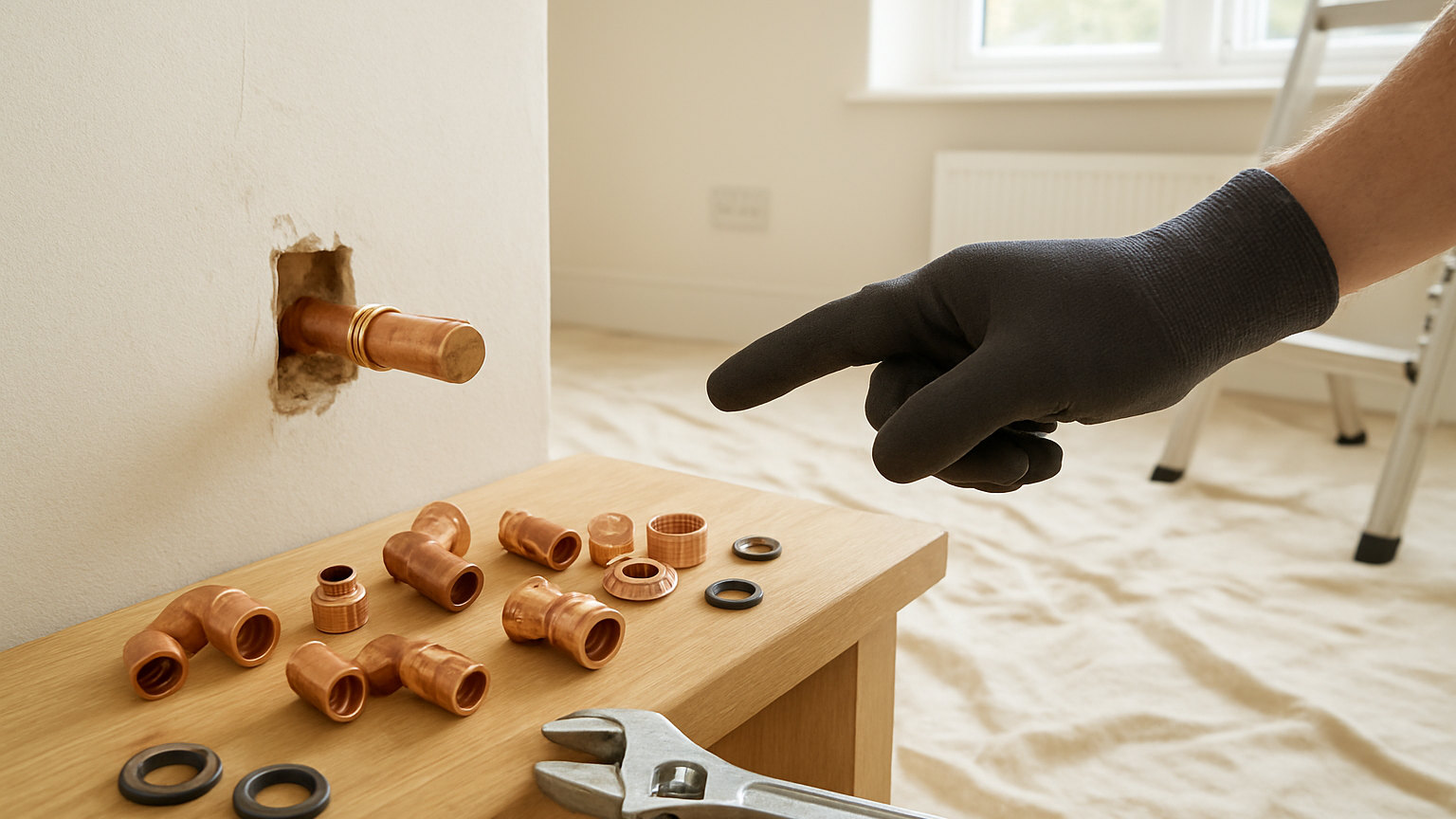
Plumbing has clear boundaries. Some work is straightforward and sensible to do yourself; some is illegal for an unregistered person to touch.
Gas: the absolute rule
Any work on a gas appliance, gas pipework or a gas meter must be carried out by a Gas Safe registered engineer.
This is a legal requirement under the Gas Safety (Installation and Use) Regulations. There is no DIY exemption, and it applies in your own home.
That includes:
- Boilers, including anything inside the casing
- Gas fires, cookers and hobs
- Any gas pipe, fitting or connection
- Moving or capping a gas supply
- Connecting or disconnecting a gas cooker
Always check the engineer's Gas Safe ID card, front and back. The back lists what they are qualified to work on. Verify the number on the Gas Safe Register.
If you smell gas
- Do not use any electrical switch, including light switches, doorbells or phones inside
- Do not smoke or use any naked flame
- Open doors and windows
- Turn the gas off at the meter control valve if you can reach it safely
- Leave the building
- Call the National Gas Emergency Service on 0800 111 999 from outside
- Do not go back in until told it is safe
Symptoms of carbon monoxide exposure include headaches, dizziness, nausea, breathlessness and confusion, and they typically improve when you leave the property. If you suspect carbon monoxide, get everyone out, call the emergency number and seek medical advice.
Fit an audible carbon monoxide alarm to the current standard in any room with a fuel-burning appliance, and test it regularly.
Unvented hot water cylinders
Work on an unvented cylinder requires a specific qualification, commonly referred to as G3.
These are pressurised vessels and a failure can be extremely dangerous. Installation and servicing is notifiable under Building Regulations.
Do not touch the safety valves, the expansion vessel or the tundish arrangement.
Where water is discharging from the tundish, that is a safety device operating. Turn the system off and call a qualified engineer.
Electrical work near water
- Bathrooms are special locations with defined zones, and much of the electrical work in them is notifiable
- Electric showers, immersion heaters and bathroom fans should be installed by a registered electrician
- Never work on wet electrics. Isolate at the consumer unit first
- Where a leak has reached any electrical fitting, turn the power off and get it checked
The Water Supply Regulations
Domestic plumbing in the UK is subject to the Water Supply (Water Fittings) Regulations, which exist mainly to prevent contamination of the mains supply.
Points that affect ordinary work:
- Fittings must be of an approved type
- Backflow prevention is required in various situations, including outside taps, which need a double check valve
- Certain work must be notified to the water company in advance, including some bath and garden installations
- A garden hose connection needs a check valve
Building Regulations
Notifiable plumbing and heating work includes:
- Installing or replacing a boiler or a heating appliance
- Installing an unvented hot water cylinder
- Installing a new bathroom where drainage or electrical work is involved
- Some new drainage connections
Registered installers can self-certify through a competent person scheme, which is why a boiler installation should come with a certificate. Keep it: you will need it when selling.
What is sensible to do yourself
- Finding and using the stopcock and isolating valves
- Changing tap washers and cartridges
- Bleeding radiators and repressurising a sealed system via the filling loop
- Clearing blocked sinks, traps and toilets
- Replacing a toilet fill valve, flush valve or siphon diaphragm
- Replacing a tap
- Remaking a compression joint
- Plumbing in a washing machine to existing valves
- Lagging pipes
- Fitting a shock arrestor or pipe clips
What to hand over
- Anything gas, without exception
- Anything inside a boiler casing
- Unvented cylinders
- Soldered joints, unless you can solder and the system is drained
- Moving soil pipes or altering drainage
- New circuits or bathroom electrics
- Power flushing a heating system
- Anything you cannot isolate
- Anything where a mistake floods the house
Before starting any plumbing job
- Know where the stopcock is and check it turns
- Identify how to isolate the section you are working on
- Have towels, a bucket and a torch ready
- Have the parts before you start, since the water will be off
- Turn off the boiler or immersion heater if working on the hot side
- Photograph anything before dismantling it
- Know when to stop and call someone
Insurance
- Escape of water is one of the most common household claims
- Photograph damage before clearing up
- Notify the insurer before starting repairs where you intend to claim
- Keep receipts for emergency work
- Poorly executed DIY work can affect a claim
If it goes wrong
Cannot stop a leak: close the stopcock, drain the system down, and call a plumber.
Water near electrics: turn off the consumer unit and do not touch anything wet.
Smell of gas: leave and call 0800 111 999 from outside.
Water discharging from the tundish: turn the system off and call a qualified engineer.
Unsure whether a job is notifiable: ask building control, or a registered installer.
Checking a tradesperson
- For gas: check the Gas Safe ID card, front and back, and verify the number on the register
- Check the back of the card lists the specific appliance type they are working on
- For unvented cylinders, ask to see the relevant qualification
- For electrical work, check registration with a competent person scheme
- Get the certificate at the end of the job and keep it with the house papers
A genuine engineer expects to be asked and will not object.


