
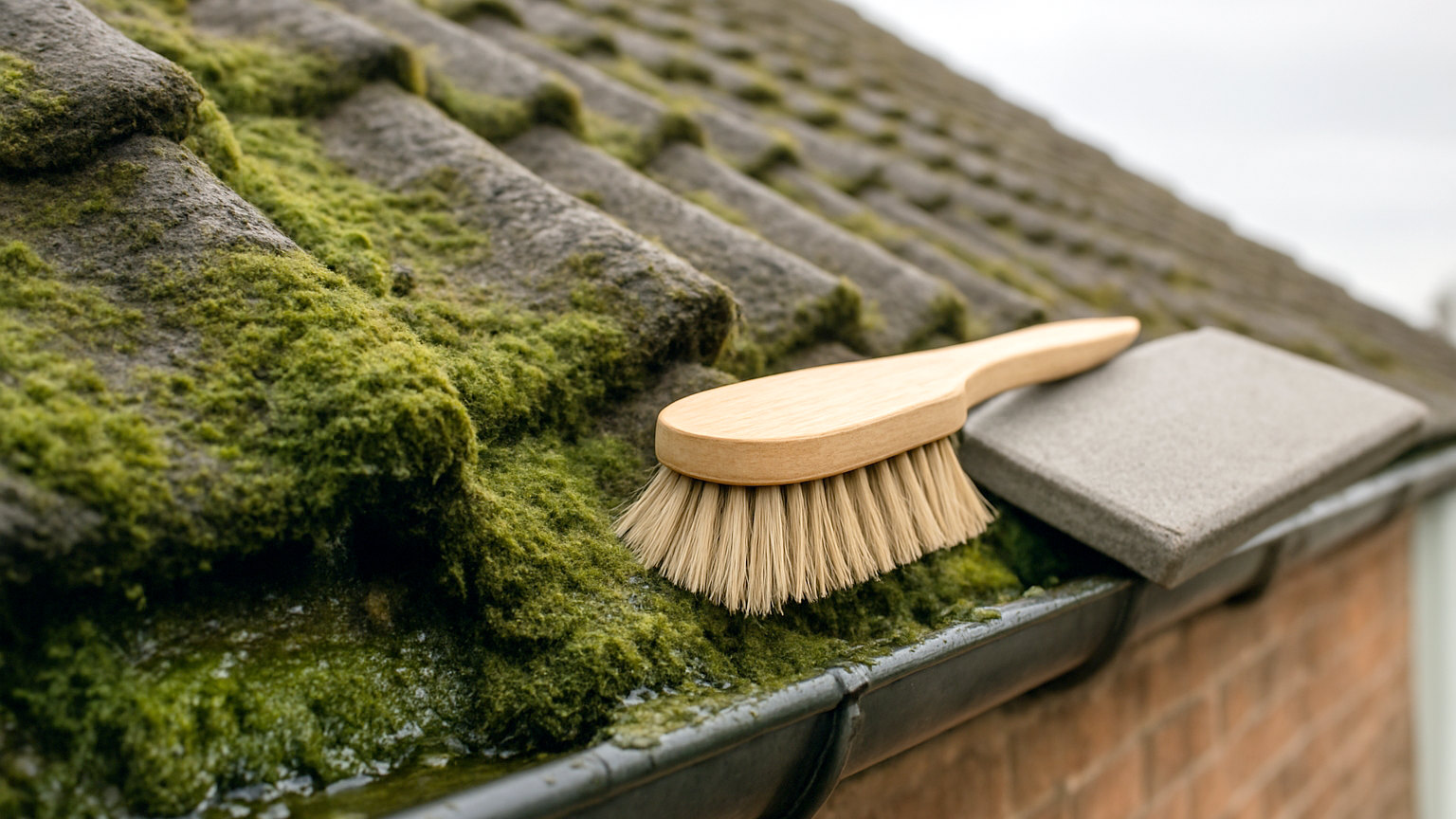
Moss on a roof is common, mostly cosmetic, and occasionally a genuine problem. The treatments cause more damage than the moss does more often than not.
When moss actually matters
It matters when:
- It is blocking gutters and downpipes, which it does as it sheds
- It is thick enough to hold water against the tiles, accelerating frost damage on a porous covering
- It is lifting tiles or growing into joints and under overlaps
- It is filling valleys and back gutters, damming water
- Large clumps are falling and blocking things
It matters less when:
- It is a thin growth on a north-facing slope, which is normal in the UK
- The roof is a modern interlocking concrete tile in sound condition
- Gutters are clear and the roof is watertight
A degree of moss on a British roof is expected. It is not automatically a defect.
Why pressure washing is a bad idea
The single most damaging thing commonly done to a roof.
- It strips the surface coating from concrete tiles, exposing the porous body and dramatically shortening their life
- It drives water up under the tiles, past the laps and onto the felt and the timbers
- It can dislodge tiles and break nibs
- It washes out ridge and verge mortar
- It damages the surface of slates and can delaminate them
- It requires someone to be on the roof, walking on it
- Damage is frequently not apparent for a year or two
A roof that has been pressure washed frequently deteriorates faster afterwards than it would have with the moss left in place.
Safer approaches
Do nothing. Genuinely the right answer for a lot of roofs. Keep the gutters clear and monitor.
Clear the gutters more often. If the problem is moss blocking gutters, addressing the gutters is cheaper and safer than treating the roof.
Careful manual removal. A roofer scraping or brushing moss off gently, working from a roof ladder or a tower. Slow and undramatic and far less damaging.
Biocide treatment. A moss-killing solution applied and left to work, with the dead growth washing off over months.
- Follow the product instructions exactly
- Consider run-off: protect plants, ponds and drains
- Some products are not suitable near watercourses
- Repeat treatment is generally needed
Zinc or copper strips. Fitted along the ridge, so rainwater carries traces of metal ions down the slope, inhibiting regrowth. Slow acting, effective over years, and worth fitting when a roofer is up there for another reason.
Reducing the cause
- Cut back overhanging branches, which shade the roof and drop debris
- Improve light and airflow to the roof where possible
- Keep gutters and valleys clear
- Accept that a north-facing slope will always have some growth
Roof coatings: be cautious
Roof coating and sealing is one of the most common areas of doorstep selling and poor value work.
How it typically goes: someone calls unannounced, says they have noticed the roof from the road, pressure washes it, and applies a coating for a substantial sum.
The concerns:
- The pressure washing itself damages the tiles
- A coating can seal a tile that needs to breathe, trapping moisture in the tile body and accelerating frost damage
- It can obscure defects rather than fixing them
- It does not address failed mortar, flashings, felt or battens, which are the things that actually cause leaks
- Coatings can affect the ability to reuse tiles later
- Some coatings are not accepted by surveyors and can raise questions on sale
- Guarantees are frequently worth little if the company ceases trading
A coating is not a substitute for a roof repair, and it is not a recognised alternative to recovering a roof that has reached the end of its life.
Doorstep callers
- Do not agree to roof work from someone who has called unannounced
- Do not let anyone go onto your roof to "have a look" without an agreed inspection
- Be suspicious of a report of alarming defects following an unrequested inspection
- Never agree on the day or pay in advance
- Get two or three independent quotes
- Ask a local roofer with a fixed address and a track record
If you do want it cleaned
- Use a roofer, not a general cleaning company
- Ask specifically what method they will use, and rule out pressure washing
- Ask them to inspect and report on the roof condition at the same time
- Ask about protecting plants and drains from run-off
- Have the gutters cleared while they are there
- Consider zinc strips at the same visit
- Get it in writing
Solar panels and roof fixtures
- Moss and debris can accumulate around panel fixings
- Bird nesting under panels is common and blocks gutters
- Mesh skirts around panels are available
- Any work near panels needs care with the electrical installation
If it goes wrong
Roof pressure washed and now leaking: water has been driven under the tiles. Get it inspected.
Tiles deteriorating after cleaning: the surface coating has been stripped. There is no undoing it.
Moss back within a year: normal. Biocide and zinc strips slow it; nothing prevents it entirely.
Gutters blocked with moss repeatedly: address the gutters and fit outlet guards.
Pressured into a coating: decline, and get independent advice.
A summary
- Some moss on a British roof is normal, not automatically a defect
- It matters when it blocks gutters, holds water or lifts tiles
- Never pressure wash a roof; it strips the tile surface and drives water under
- Manual removal, biocide or zinc strips are the safer approaches
- A coating is not a repair and can trap moisture in the tile
- Decline doorstep offers and get independent quotes


