
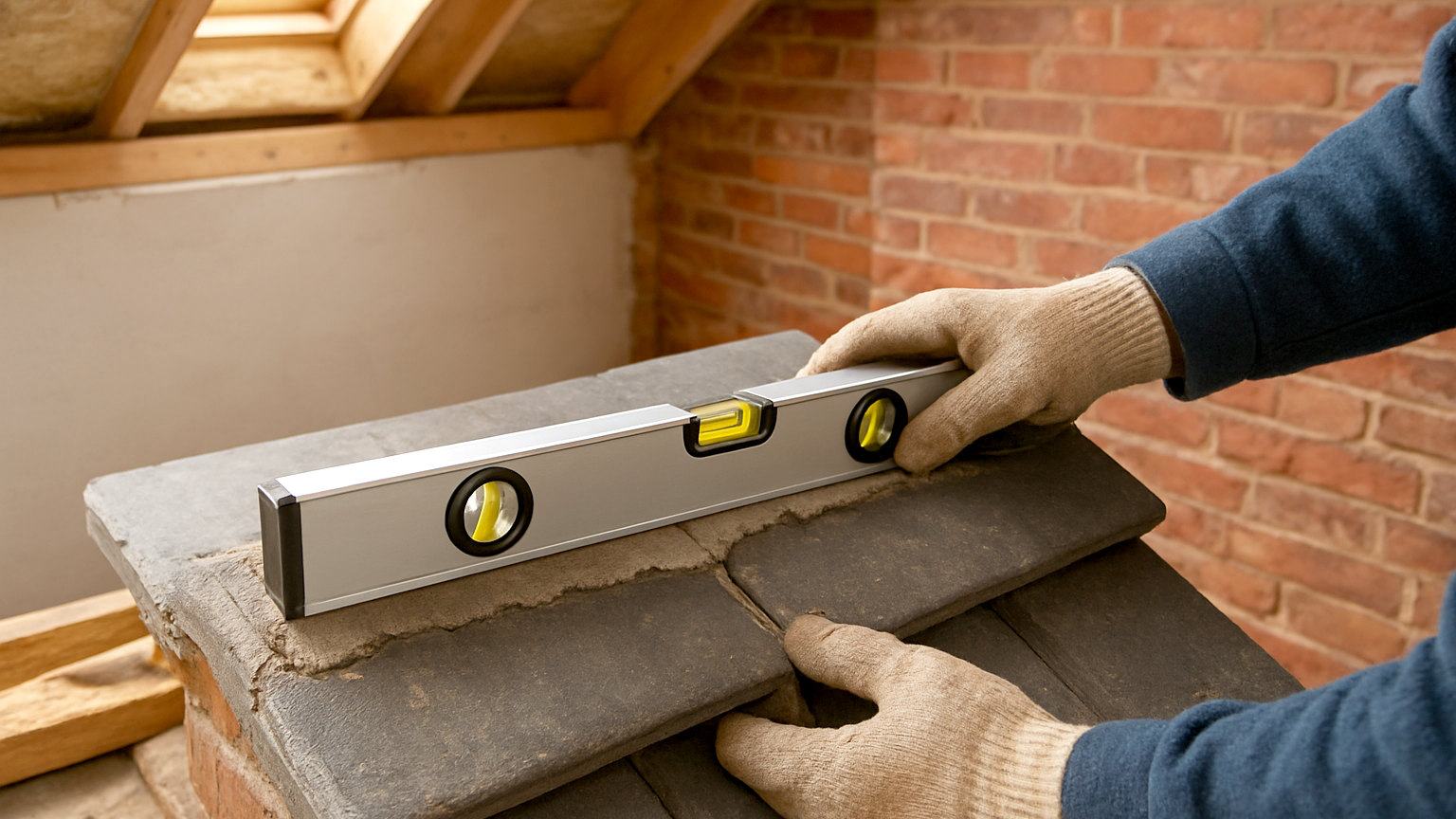
The ridge along the top of a roof, and the verge at each gable end, are the most exposed parts of the covering and among the most common sources of defects.
Safety
A loose ridge tile is a genuine hazard. They are heavy, and a fall from ridge height onto a path or a person is serious.
- If you can see a ridge tile visibly rocking or displaced, keep the area below clear and get it dealt with promptly
- This is roof surface work at the highest point of the building. It is roofer's work, without exception
- Do not attempt ridge or verge repairs yourself
Step 1: what a ridge is
The ridge tiles cap the apex where two roof slopes meet, closing the gap and shedding water.
They are secured in one of two ways.
Bedded ridge. The traditional method. Ridge tiles bedded on a sand and cement mortar, which also fills the joints between them.
- Mortar is rigid and the roof moves with temperature and wind
- Over 10 to 20 years the mortar cracks, crumbles and falls out
- Once the mortar has gone, the tile is held by nothing
Dry ridge. A mechanical system with clamps, screws and a ventilated ridge roll under the tiles.
- No mortar, so nothing to crack
- Mechanically fixed, so far more secure in wind
- Provides ridge ventilation, which helps the roof space breathe
- Now required for new work and re-roofing under the current British Standard
- Longer lasting and effectively maintenance free
Step 2: spot the defects
From the ground with binoculars.
- Cracked or missing mortar along the ridge line or between ridge tiles
- Mortar fragments in the gutter or on the ground
- A ridge tile visibly out of line, lifted or rocking
- Gaps between ridge tiles
- Vegetation or moss growing in the joints
- A dip or sag in the ridge line, which is structural rather than a covering matter
Step 3: what a proper repair is
Repointing. Raking out the failed mortar and repointing the joints. A short-term measure: it addresses the visible mortar without necessarily rebedding the tile.
Rebedding. The ridge tiles are lifted, the old mortar removed entirely, and the tiles rebedded on fresh mortar. A proper repair to a bedded ridge, and it will eventually crack again.
Conversion to dry ridge. The ridge tiles are lifted, a ventilated ridge roll is fitted, and the tiles are mechanically fixed with clamps and screws. Frequently the best value option, since it does not need doing again and improves ventilation.
When getting a quote for ridge work, ask specifically which of these is being priced. The difference in cost and in longevity is substantial.
Step 4: the verge
The edge of the roof at a gable end.
Mortar bedded verge. The traditional detail, with the tiles bedded on mortar over an undercloak of slate or fibre cement board.
- Same problem as a bedded ridge: the mortar cracks and falls out
- Once it goes, wind gets under the tiles and lifts them
- Water gets into the gable wall
- Fragments of mortar in the gutter are the usual first sign
Dry verge. Interlocking plastic or metal units clipped or screwed over the tile ends.
- No mortar to fail
- Mechanically fixed and secure in wind
- Available in a range of colours
- Quick to fit and long lasting
- Some people dislike the appearance on a period property
Step 5: why it matters
- Safety: ridge and verge tiles are heavy and fall from height
- Water ingress: an open ridge or verge lets water straight into the roof space or the gable wall
- Wind damage: once one tile lifts at a verge, the wind gets under the row and can strip a large area
- Progressive failure: a small gap becomes a large one over a winter
Ridge and verge defects are among the most common findings on a house survey and are worth dealing with promptly.
Step 6: chimney flaunching
The same principle at the chimney.
Flaunching is the mortar fillet on top of the stack holding the pots and shedding water. It cracks and crumbles in exactly the same way and lets water straight down into the stack, showing as damp on the chimney breast inside.
Check it at the same time as the ridge.
Step 7: getting it quoted
- Get two or three written quotes
- Ask whether they are repointing, rebedding, or converting to dry fix
- Ask what access is included
- Ask them to photograph the ridge and show you the condition
- Ask whether the whole ridge or only a section is being done
- Ask about the mortar mix or the system being used
- Get a written guarantee, and ask how long it runs
Repointing a ridge that needs rebedding is a common way of producing a cheap quote that does not last.
Step 8: unsolicited callers
Ridge and verge work is the classic subject of doorstep approaches, because the defect is visible from the street and the householder cannot inspect the work.
- Do not accept an offer from someone who has called unannounced
- Do not agree to work on the day
- Get independent quotes
- Do not pay in advance
- Ask for photographs before and after
If it goes wrong
Mortar cracked again within a few years: it was repointed rather than rebedded, or the mix was wrong.
Tiles lifted at the verge after a storm: the verge mortar had failed. Consider dry verge units.
Ridge tile fallen: keep the area clear and get the whole ridge inspected, not just that tile.
Damp on the chimney breast: check the flaunching and the flashings.
Quote seems very cheap: ask exactly what is included and whether tiles are being lifted.
A summary
- A loose ridge tile is a falling hazard; keep the area below clear
- Bedded ridges crack because mortar is rigid and the roof moves
- Dry ridge and dry verge systems are mechanically fixed and do not need redoing
- Ask whether a quote covers repointing, rebedding or dry fix conversion
- Check the chimney flaunching at the same time
- Never accept ridge work from a doorstep caller


